Review


recombinant mouse timp2  (Bio-Techne corporation)


Bioz Verified Symbol Bio-Techne corporation is a verified supplier

Bioz Manufacturer Symbol Bio-Techne corporation manufactures this product  

  • Logo
  • About
  • News
  • Press Release
  • Team
  • Advisors
  • Partners
  • Contact
  • Bioz Stars
  • Bioz vStars
  • 90

    Structured Review

    Bio-Techne corporation recombinant mouse timp2
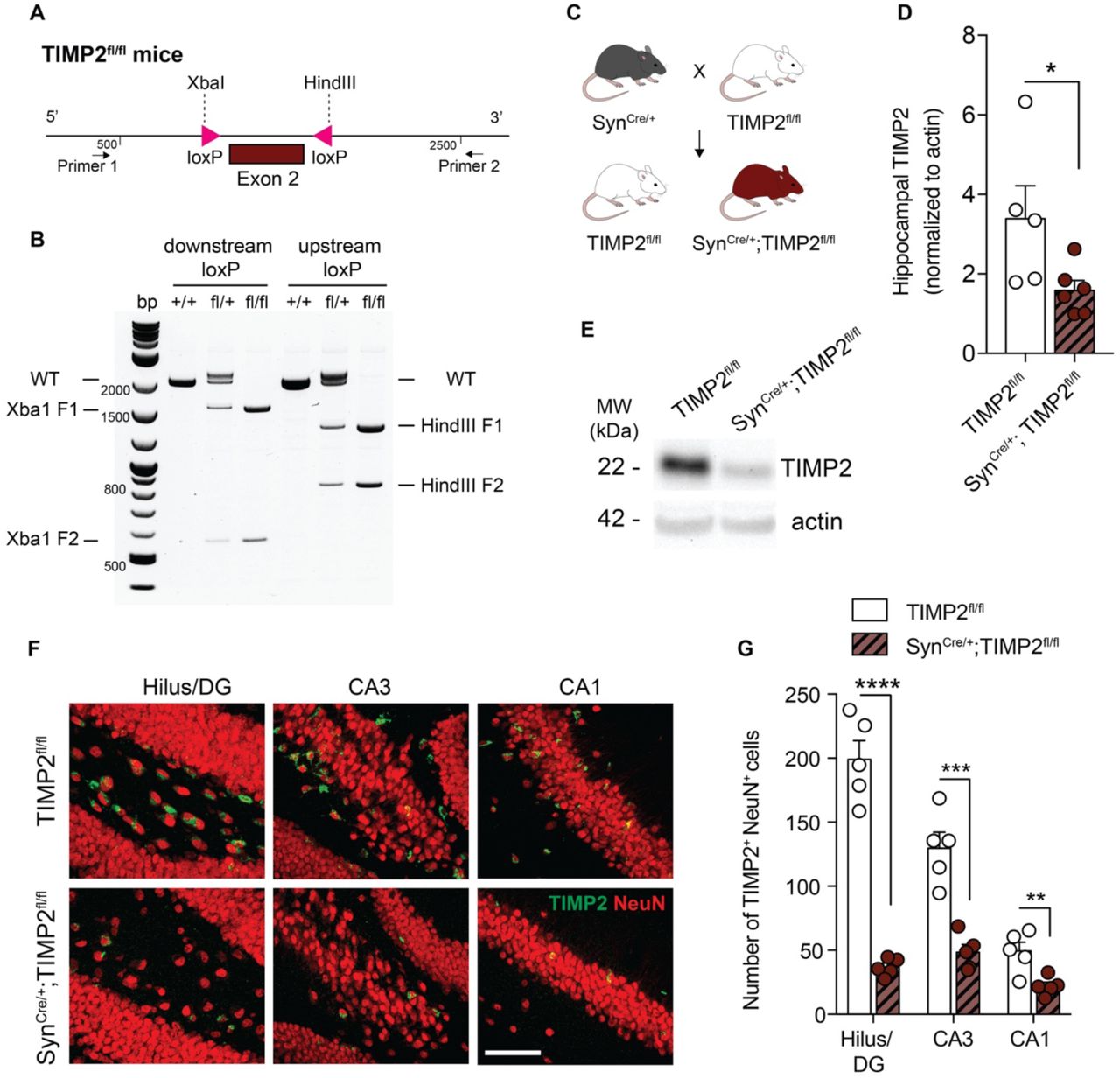
    (A) Schematic illustration of the targeting strategy of to insert loxP sites flanking exon 2 to generate a model for conditional deletion of <t>TIMP2</t> . (B) Representative genotyping results revealing the PCR products for the mutant LoxP and wild-type alleles. Wild-type (+/+), heterozygous (fl/+), and homozygous (fl/fl) mice were identified according to this strategy. (C) Schematic diagram of cross-breeding strategy to establish neuron-specific TIMP2 deletion: male TIMP2 fl/fl mice were mated with Syn Cre/+ females to obtain Syn Cre/+ ; TIMP2 fl/fl and their respective TIMP2 fl/fl littermate controls. (D-E) Representative TIMP2 immunoblot and corresponding quantification of TIMP2 protein levels from hippocampal lysate of TIMP2 fl/fl and Syn Cre/+ ; TIMP2 fl/fl (2-3 months of age, N = 5-6 mice per group). (F) High-magnification view of hilus/DG, CA3, and CA1 sub-regions of TIMP2+ cells co-expressing NeuN in TIMP2 fl/fl and Syn Cre/+ ; TIMP2 fl/fl mice (2-3 months of age, N = 5 mice per group, scale bar, 20 μm) with corresponding (G) quantification of the total number of TIMP2+ cells with NeuN+ nuclei across hippocampal subregions. Data are represented as mean ± SEM. Student’s t-test for two-group comparisons. * P <0.05, ** P <0.01, *** P <0.001, **** P <0.0001. Data points represent individual mice.
    Recombinant Mouse Timp2, supplied by Bio-Techne corporation, used in various techniques. Bioz Stars score: 90/100, based on 7 PubMed citations. ZERO BIAS - scores, article reviews, protocol conditions and more
    https://www.bioz.com/result/recombinant mouse timp2/product/Bio-Techne corporation
    Average 90 stars, based on 7 article reviews
    recombinant mouse timp2 - by Bioz Stars, 2026-03
    90/100 stars

    Images

    1) Product Images from "Neuronal TIMP2 regulates hippocampus-dependent plasticity and extracellular matrix complexity"

    Article Title: Neuronal TIMP2 regulates hippocampus-dependent plasticity and extracellular matrix complexity

    Journal: bioRxiv

    doi: 10.1101/2022.12.28.522138

    (A) Schematic illustration of the targeting strategy of to insert loxP sites flanking exon 2 to generate a model for conditional deletion of TIMP2 . (B) Representative genotyping results revealing the PCR products for the mutant LoxP and wild-type alleles. Wild-type (+/+), heterozygous (fl/+), and homozygous (fl/fl) mice were identified according to this strategy. (C) Schematic diagram of cross-breeding strategy to establish neuron-specific TIMP2 deletion: male TIMP2 fl/fl mice were mated with Syn Cre/+ females to obtain Syn Cre/+ ; TIMP2 fl/fl and their respective TIMP2 fl/fl littermate controls. (D-E) Representative TIMP2 immunoblot and corresponding quantification of TIMP2 protein levels from hippocampal lysate of TIMP2 fl/fl and Syn Cre/+ ; TIMP2 fl/fl (2-3 months of age, N = 5-6 mice per group). (F) High-magnification view of hilus/DG, CA3, and CA1 sub-regions of TIMP2+ cells co-expressing NeuN in TIMP2 fl/fl and Syn Cre/+ ; TIMP2 fl/fl mice (2-3 months of age, N = 5 mice per group, scale bar, 20 μm) with corresponding (G) quantification of the total number of TIMP2+ cells with NeuN+ nuclei across hippocampal subregions. Data are represented as mean ± SEM. Student’s t-test for two-group comparisons. * P <0.05, ** P <0.01, *** P <0.001, **** P <0.0001. Data points represent individual mice.
    Figure Legend Snippet: (A) Schematic illustration of the targeting strategy of to insert loxP sites flanking exon 2 to generate a model for conditional deletion of TIMP2 . (B) Representative genotyping results revealing the PCR products for the mutant LoxP and wild-type alleles. Wild-type (+/+), heterozygous (fl/+), and homozygous (fl/fl) mice were identified according to this strategy. (C) Schematic diagram of cross-breeding strategy to establish neuron-specific TIMP2 deletion: male TIMP2 fl/fl mice were mated with Syn Cre/+ females to obtain Syn Cre/+ ; TIMP2 fl/fl and their respective TIMP2 fl/fl littermate controls. (D-E) Representative TIMP2 immunoblot and corresponding quantification of TIMP2 protein levels from hippocampal lysate of TIMP2 fl/fl and Syn Cre/+ ; TIMP2 fl/fl (2-3 months of age, N = 5-6 mice per group). (F) High-magnification view of hilus/DG, CA3, and CA1 sub-regions of TIMP2+ cells co-expressing NeuN in TIMP2 fl/fl and Syn Cre/+ ; TIMP2 fl/fl mice (2-3 months of age, N = 5 mice per group, scale bar, 20 μm) with corresponding (G) quantification of the total number of TIMP2+ cells with NeuN+ nuclei across hippocampal subregions. Data are represented as mean ± SEM. Student’s t-test for two-group comparisons. * P <0.05, ** P <0.01, *** P <0.001, **** P <0.0001. Data points represent individual mice.

    Techniques Used: Mutagenesis, Western Blot, Expressing

    (A) Low-magnification view (upper image) of mouse hippocampus and high-magnification view (lower images) of hilus/DG, CA3, and CA1 subregions showing TIMP2 + and TIMP2 + NeuN + cells. Scale bars, 200 μm and 20 μm (inset). (B) Quantification of the total number of TIMP2 + cells and TIMP2 + NeuN + cells across hippocampal subregions in WT mice (2 months of age; N = 8, males and females). (C) Schematic representation of high molecular-weight cut-off (1-MDa) in vivo microdialysis to assay TIMP2 levels in mouse hippocampal ISF. (D) TIMP2 immunoblotting of hippocampal ISF dialyzed from 2-month-old WT and TIMP2 KO mice, with corresponding Ponceau S stain. (E) Schematic representation of bulk RNA-seq workflow performed in isolated WT and TIMP2 KO hippocampi (N=13-17/group, sex-matched) for transcriptomic analysis. (F) Volcano plot showing the fold-change of genes (log 2 scale) differentially expressed in hippocampus of TIMP2 KO vs. WT mice. Downregulated DEGs at P < 0.05 are highlighted in red (upregulated in black). (G) Top 10 significant pathways for downregulated DEGs from Gene Set Enrichment Analysis. Data are represented as mean ± SEM. DG, dentate gyrus; eISF, exchangeable interstitial fluid; aCSF, artificial cerebrospinal fluid.
    Figure Legend Snippet: (A) Low-magnification view (upper image) of mouse hippocampus and high-magnification view (lower images) of hilus/DG, CA3, and CA1 subregions showing TIMP2 + and TIMP2 + NeuN + cells. Scale bars, 200 μm and 20 μm (inset). (B) Quantification of the total number of TIMP2 + cells and TIMP2 + NeuN + cells across hippocampal subregions in WT mice (2 months of age; N = 8, males and females). (C) Schematic representation of high molecular-weight cut-off (1-MDa) in vivo microdialysis to assay TIMP2 levels in mouse hippocampal ISF. (D) TIMP2 immunoblotting of hippocampal ISF dialyzed from 2-month-old WT and TIMP2 KO mice, with corresponding Ponceau S stain. (E) Schematic representation of bulk RNA-seq workflow performed in isolated WT and TIMP2 KO hippocampi (N=13-17/group, sex-matched) for transcriptomic analysis. (F) Volcano plot showing the fold-change of genes (log 2 scale) differentially expressed in hippocampus of TIMP2 KO vs. WT mice. Downregulated DEGs at P < 0.05 are highlighted in red (upregulated in black). (G) Top 10 significant pathways for downregulated DEGs from Gene Set Enrichment Analysis. Data are represented as mean ± SEM. DG, dentate gyrus; eISF, exchangeable interstitial fluid; aCSF, artificial cerebrospinal fluid.

    Techniques Used: Molecular Weight, In Vivo, Western Blot, Staining, RNA Sequencing Assay, Isolation

    (A) Quantification of the total number of TIMP2 + and TIMP2 + NeuN + cells at the hilus/DG, (B) CA3 and (C) CA1 subregions of the hippocampus from WT males and females at 2 months of age (N = 4 mice per sex). (D) Cresyl violet-stained section depicting the microdialysis probe tract through brain surface extending into hippocampus, with microdialysis probe position seen at Bregma - 3.08mm based on Paxinos and Watson atlas. Scale bar, 500 μm. (E) Top 10 significant pathways for upregulated DEGs in hippocampi of TIMP2 KO mice relative to WT mice (N = 13-17 mice per group). Data are represented as mean ± SEM.
    Figure Legend Snippet: (A) Quantification of the total number of TIMP2 + and TIMP2 + NeuN + cells at the hilus/DG, (B) CA3 and (C) CA1 subregions of the hippocampus from WT males and females at 2 months of age (N = 4 mice per sex). (D) Cresyl violet-stained section depicting the microdialysis probe tract through brain surface extending into hippocampus, with microdialysis probe position seen at Bregma - 3.08mm based on Paxinos and Watson atlas. Scale bar, 500 μm. (E) Top 10 significant pathways for upregulated DEGs in hippocampi of TIMP2 KO mice relative to WT mice (N = 13-17 mice per group). Data are represented as mean ± SEM.

    Techniques Used: Staining

    (A) Schematic timeline of BrdU intraperitoneal injection protocol to label proliferating cells in the DG in isolated brain sections. (B) Schematic timeline of BrdU intraperitoneal injection protocol used for cell fate “survival” labeling in DG of isolated brain sections. (C) Representative confocal microscopy images of BrdU + cells in the DG of WT and TIMP2 KO mice (2-3 months of age, N = 11-12 mice per group; arrowheads indicate BrdU + cells; scale bar, 50 μm) with corresponding (D) quantification of number of BrdU + cells in the dentate gyrus per unit area. (E) Representative confocal microscopy images of proliferating Ki67 + cells in the DG of WT and TIMP2 KO mice (2-3 months of age, N = 11-12 mice per group; arrowheads indicate Ki67 + cells; scale bar, 50 μm) with corresponding (F) quantification of the number of Ki67 + proliferating cells per DG in WT and TIMP2 KO mice. (G) Representative confocal microscopy images of Sox2 + in the DG of WT and TIMP2 KO mice (2-3 months of age, N = 11-12 mice per group; arrowheads indicate Sox2 + cells; scale bar, 50 μm) with corresponding (H) quantification of Sox2 + neural progenitor cells in the DG of WT and TIMP2 KO mice. (I) Representative confocal microscopy images of DCX + cells in the DG of WT and TIMP2 KO mice (2-3 months of age, N = 11-12 mice per group; scale bar, 50 μm) with corresponding (J) quantification of DCX + immature neuroblasts in DG of WT and TIMP2 KO mice. (K) Representative confocal microscopy images of BrdU + NeuN + cells in DG of WT and TIMP2 KO mice (2-3 months of age. N = 8-11 mice per group; scale bar, 50 μm and 100 μm (inset)) with corresponding (L) quantification of newborn neurons (BrdU + NeuN + cells) in the DG of WT and TIMP2 KO mice. Data are represented as mean ± SEM. Student’s t -test for two-group comparisons. * P <0.05; ** P <0.01; *** P <0.001. Data points represent individual mice. IHC, immunohistochemistry; DG, dentate gyrus; DCX, doublecortin.
    Figure Legend Snippet: (A) Schematic timeline of BrdU intraperitoneal injection protocol to label proliferating cells in the DG in isolated brain sections. (B) Schematic timeline of BrdU intraperitoneal injection protocol used for cell fate “survival” labeling in DG of isolated brain sections. (C) Representative confocal microscopy images of BrdU + cells in the DG of WT and TIMP2 KO mice (2-3 months of age, N = 11-12 mice per group; arrowheads indicate BrdU + cells; scale bar, 50 μm) with corresponding (D) quantification of number of BrdU + cells in the dentate gyrus per unit area. (E) Representative confocal microscopy images of proliferating Ki67 + cells in the DG of WT and TIMP2 KO mice (2-3 months of age, N = 11-12 mice per group; arrowheads indicate Ki67 + cells; scale bar, 50 μm) with corresponding (F) quantification of the number of Ki67 + proliferating cells per DG in WT and TIMP2 KO mice. (G) Representative confocal microscopy images of Sox2 + in the DG of WT and TIMP2 KO mice (2-3 months of age, N = 11-12 mice per group; arrowheads indicate Sox2 + cells; scale bar, 50 μm) with corresponding (H) quantification of Sox2 + neural progenitor cells in the DG of WT and TIMP2 KO mice. (I) Representative confocal microscopy images of DCX + cells in the DG of WT and TIMP2 KO mice (2-3 months of age, N = 11-12 mice per group; scale bar, 50 μm) with corresponding (J) quantification of DCX + immature neuroblasts in DG of WT and TIMP2 KO mice. (K) Representative confocal microscopy images of BrdU + NeuN + cells in DG of WT and TIMP2 KO mice (2-3 months of age. N = 8-11 mice per group; scale bar, 50 μm and 100 μm (inset)) with corresponding (L) quantification of newborn neurons (BrdU + NeuN + cells) in the DG of WT and TIMP2 KO mice. Data are represented as mean ± SEM. Student’s t -test for two-group comparisons. * P <0.05; ** P <0.01; *** P <0.001. Data points represent individual mice. IHC, immunohistochemistry; DG, dentate gyrus; DCX, doublecortin.

    Techniques Used: Injection, Isolation, Labeling, Confocal Microscopy, Immunohistochemistry

    (A) Schematic representation of the workflow for dendritic spine quantification using Lucifer Yellow-filled DG granule cells. (B) Overall dendritic spine density in DG granule cells iontophoretically labeled with Lucifer Yellow using sections isolated from six-month-old WT and TIMP2 KO mice (N=6 neurons per mouse from N=4-5 mice per group). (C) Quantification of the percentage of spines categorized according to “thin” spine heads or (D) “mushroom” spine heads. (E) Representative deconvolved confocal image of a dendritic segment from WT and TIMP2 KO Lucifer Yellow-labeled brain sections, and the downstream 3D reconstruction, with dendritic segment shown in pink, thin spines in green, stubby in blue, mushroom in red, and filopodia in yellow. Scale bar, 2 μm. Data are represented as mean ± SEM. Nested t-test for comparisons with neuron and mouse as levels. * P <0.05; ** P <0.01. Data points represent neurons (left) and mice (right) for each group. LY, Lucifer Yellow.
    Figure Legend Snippet: (A) Schematic representation of the workflow for dendritic spine quantification using Lucifer Yellow-filled DG granule cells. (B) Overall dendritic spine density in DG granule cells iontophoretically labeled with Lucifer Yellow using sections isolated from six-month-old WT and TIMP2 KO mice (N=6 neurons per mouse from N=4-5 mice per group). (C) Quantification of the percentage of spines categorized according to “thin” spine heads or (D) “mushroom” spine heads. (E) Representative deconvolved confocal image of a dendritic segment from WT and TIMP2 KO Lucifer Yellow-labeled brain sections, and the downstream 3D reconstruction, with dendritic segment shown in pink, thin spines in green, stubby in blue, mushroom in red, and filopodia in yellow. Scale bar, 2 μm. Data are represented as mean ± SEM. Nested t-test for comparisons with neuron and mouse as levels. * P <0.05; ** P <0.01. Data points represent neurons (left) and mice (right) for each group. LY, Lucifer Yellow.

    Techniques Used: Labeling, Isolation

    (A) Schematic of the novel location recognition assay. (B) Discrimination index for novel location recognition on day 2 for WT and TIMP2 KO mice (2-3 months of age, N = 11-12 mice per group). (C) Schematic of the contextual and cued fear-conditioning assay. (D, E) Freezing levels by interval and overall measured in the conditioned-fear context A in WT and TIMP2 KO mice (2-3 months of age, N = 11-12 mice per group). (F) Schematic diagram of modified Barnes maze with color coding for overall strategy classification. (G) Proportion of WT and TIMP2 KO mice using non-hippocampus-dependent (gray) and hippocampus-dependent (yellow) strategies during the testing trials (2-3 months of age, n = 9 mice per group). (H) Strategy utilization by WT and TIMP2 KO mice on day 3 of the Barnes Maze and corresponding (I) cognitive scores, ranked by strategy complexity for WT and TIMP2 KO mice on day 3 in the Barnes Maze. Data are represented as mean ± SEM. Student’s t-test for two-group comparisons in (B, D, E) , chi-square test in (H) , and nested t-test (I) for trial and mouse levels. * P <0.05, ** P <0.01. Data points represent individual mice.
    Figure Legend Snippet: (A) Schematic of the novel location recognition assay. (B) Discrimination index for novel location recognition on day 2 for WT and TIMP2 KO mice (2-3 months of age, N = 11-12 mice per group). (C) Schematic of the contextual and cued fear-conditioning assay. (D, E) Freezing levels by interval and overall measured in the conditioned-fear context A in WT and TIMP2 KO mice (2-3 months of age, N = 11-12 mice per group). (F) Schematic diagram of modified Barnes maze with color coding for overall strategy classification. (G) Proportion of WT and TIMP2 KO mice using non-hippocampus-dependent (gray) and hippocampus-dependent (yellow) strategies during the testing trials (2-3 months of age, n = 9 mice per group). (H) Strategy utilization by WT and TIMP2 KO mice on day 3 of the Barnes Maze and corresponding (I) cognitive scores, ranked by strategy complexity for WT and TIMP2 KO mice on day 3 in the Barnes Maze. Data are represented as mean ± SEM. Student’s t-test for two-group comparisons in (B, D, E) , chi-square test in (H) , and nested t-test (I) for trial and mouse levels. * P <0.05, ** P <0.01. Data points represent individual mice.

    Techniques Used: Modification

    (A) Percentage of freezing detected in the cued task of the fear-conditioning assay in WT and TIMP2 KO mice (2-3 months of age, N = 12 mice per group). (B) Latency of TIMP2 KO and WT mice to fall in the rotarod in the fixed and (C) acceleration protocol at 4, 20 and 40 rpm (N = 12 mice per group). (D) Total distance traveled by TIMP2 KO and WT mice in the open field, as well as (E) velocity, and (F) percentage of time spent in the center of the arena (N = 11-12 mice per group). (G) Latency of TIMP2 KO and WT mice to fall in the wire test (N = 12 mice per group). (H) Time for TIMP2 KO and WT mice to descend the pole in the pole test (N = 11-12 mice per group). (I) Grip strength of the fore-, hind- and four limbs in TIMP2 KO and WT mice (N = 12 mice per group). (J) Hindlimb extension by clasping score in TIMP2 KO and WT mice (N = 10-11 mice per group). Data are represented as mean ± SEM. Student’s t -test for two-group comparisons. n.s., not significant.
    Figure Legend Snippet: (A) Percentage of freezing detected in the cued task of the fear-conditioning assay in WT and TIMP2 KO mice (2-3 months of age, N = 12 mice per group). (B) Latency of TIMP2 KO and WT mice to fall in the rotarod in the fixed and (C) acceleration protocol at 4, 20 and 40 rpm (N = 12 mice per group). (D) Total distance traveled by TIMP2 KO and WT mice in the open field, as well as (E) velocity, and (F) percentage of time spent in the center of the arena (N = 11-12 mice per group). (G) Latency of TIMP2 KO and WT mice to fall in the wire test (N = 12 mice per group). (H) Time for TIMP2 KO and WT mice to descend the pole in the pole test (N = 11-12 mice per group). (I) Grip strength of the fore-, hind- and four limbs in TIMP2 KO and WT mice (N = 12 mice per group). (J) Hindlimb extension by clasping score in TIMP2 KO and WT mice (N = 10-11 mice per group). Data are represented as mean ± SEM. Student’s t -test for two-group comparisons. n.s., not significant.

    Techniques Used:

    (A) MMP2 mRNA levels by qPCR from isolated hippocampus of WT and TIMP2 KO mice (2-3 months of age, N = 6 mice per group). (B) Immunoblotting of MMP2 from hippocampal lysates of WT and TIMP2 KO mice (2-3 months of age, N = 9 mice per group) with corresponding (C) quantification of MMP2 protein levels. (D) Representative confocal microscopy images showing aggrecan puncta in the molecular layer of DG from WT and TIMP2 KO mice (2-3 months of age, N = 8-13 mice per group; scale bar, 5 μm) with corresponding (E) quantification of puncta. (F) Representative confocal microscopy images and corresponding (G) quantification of aggrecan and homer1 co-localization in the molecular layer of DG from WT and TIMP2 KO mice (2-3 months of age, N = 8-13 mice per group; scale bar, 5 μm). Circles indicate colocalized puncta. (H) Representative images showing the migration of DCX + cells in the SGZ and GCL of WT and TIMP2 KO mice (2-3 months of age, N = 11-12 mice per group, scale bar, 20 μm with corresponding (I) quantification of DCX + cells distributed in the subgranular zone (SGZ) and granule cell layer (GCL) of DG. (J) Representative surface scanning electron microscopy (SEM) from DG of WT and TIMP2 KO mice (2-3 months of age, N = 3 mice per group, scale bar, 2 μm, with corresponding (K) quantification of ECM microarchitecture in terms of fiber diameter measurements. Data are represented as mean ± SEM. Student’s t-test for two-group comparisons. * P <0.05, ** P <0.01, *** P <0.001. Data points represent individual mice.
    Figure Legend Snippet: (A) MMP2 mRNA levels by qPCR from isolated hippocampus of WT and TIMP2 KO mice (2-3 months of age, N = 6 mice per group). (B) Immunoblotting of MMP2 from hippocampal lysates of WT and TIMP2 KO mice (2-3 months of age, N = 9 mice per group) with corresponding (C) quantification of MMP2 protein levels. (D) Representative confocal microscopy images showing aggrecan puncta in the molecular layer of DG from WT and TIMP2 KO mice (2-3 months of age, N = 8-13 mice per group; scale bar, 5 μm) with corresponding (E) quantification of puncta. (F) Representative confocal microscopy images and corresponding (G) quantification of aggrecan and homer1 co-localization in the molecular layer of DG from WT and TIMP2 KO mice (2-3 months of age, N = 8-13 mice per group; scale bar, 5 μm). Circles indicate colocalized puncta. (H) Representative images showing the migration of DCX + cells in the SGZ and GCL of WT and TIMP2 KO mice (2-3 months of age, N = 11-12 mice per group, scale bar, 20 μm with corresponding (I) quantification of DCX + cells distributed in the subgranular zone (SGZ) and granule cell layer (GCL) of DG. (J) Representative surface scanning electron microscopy (SEM) from DG of WT and TIMP2 KO mice (2-3 months of age, N = 3 mice per group, scale bar, 2 μm, with corresponding (K) quantification of ECM microarchitecture in terms of fiber diameter measurements. Data are represented as mean ± SEM. Student’s t-test for two-group comparisons. * P <0.05, ** P <0.01, *** P <0.001. Data points represent individual mice.

    Techniques Used: Isolation, Western Blot, Confocal Microscopy, Migration, Electron Microscopy

    (A) Discrimination index for novel location recognition on day 2 and (B,C) contextual fear-conditioning freezing levels in TIMP2 fl/fl and Syn Cre/+ ; TIMP2 fl/fl mice (2-3 months of age, N = 13-15 mice per group). (D) Proportion of mice of each genotype using non-hippocampus-dependent (gray) and hippocampus-dependent (yellow) search strategies during the testing trials of TIMP2 fl/fl and Syn Cre/+ ; TIMP2 fl/fl mice in Barnes maze (2-3 months of age, N = 12-14 mice per group) with (E) quantification of the percentage of mice using these strategies by on day 3. (F) Cognitive complexity scores for TIMP2 fl/fl and Syn Cre/+ ; TIMP2 fl/fl mice based on strategies used on day 3 of Barnes maze. (G) Representative confocal microscopy images of BrdU + and NeuN + cells in DG of TIMP2 fl/fl and Syn Cre/+ ; TIMP2 fl/fl mice (2-3 months of age, N = 7–8 mice per group, scale bar, 100 μm) with corresponding (H) quantification of BrdU + NeuN + newborn neurons in the DG. (I) Representative confocal microscopy images of aggrecan and homer1 puncta in molecular layer of DG of TIMP2 fl/fl and Syn Cre/+ ; TIMP2 fl/fl mice (N = 7-8 mice per group, scale bar, 5 μm) with corresponding (J) quantification of aggrecan puncta and (K) co-localized puncta of aggrecan and homer1, as indicated by overlaid circles. Data are represented as mean ± SEM. Student’s t -test for two-group comparisons in (A-C) , (H) , and (J, K) , chi-square test in (E) , and nested t-test (F) with trial and mice as levels. * P <0.05, ** P <0.01, *** P <0.001, **** P <0.0001. Data points represent individual mice.
    Figure Legend Snippet: (A) Discrimination index for novel location recognition on day 2 and (B,C) contextual fear-conditioning freezing levels in TIMP2 fl/fl and Syn Cre/+ ; TIMP2 fl/fl mice (2-3 months of age, N = 13-15 mice per group). (D) Proportion of mice of each genotype using non-hippocampus-dependent (gray) and hippocampus-dependent (yellow) search strategies during the testing trials of TIMP2 fl/fl and Syn Cre/+ ; TIMP2 fl/fl mice in Barnes maze (2-3 months of age, N = 12-14 mice per group) with (E) quantification of the percentage of mice using these strategies by on day 3. (F) Cognitive complexity scores for TIMP2 fl/fl and Syn Cre/+ ; TIMP2 fl/fl mice based on strategies used on day 3 of Barnes maze. (G) Representative confocal microscopy images of BrdU + and NeuN + cells in DG of TIMP2 fl/fl and Syn Cre/+ ; TIMP2 fl/fl mice (2-3 months of age, N = 7–8 mice per group, scale bar, 100 μm) with corresponding (H) quantification of BrdU + NeuN + newborn neurons in the DG. (I) Representative confocal microscopy images of aggrecan and homer1 puncta in molecular layer of DG of TIMP2 fl/fl and Syn Cre/+ ; TIMP2 fl/fl mice (N = 7-8 mice per group, scale bar, 5 μm) with corresponding (J) quantification of aggrecan puncta and (K) co-localized puncta of aggrecan and homer1, as indicated by overlaid circles. Data are represented as mean ± SEM. Student’s t -test for two-group comparisons in (A-C) , (H) , and (J, K) , chi-square test in (E) , and nested t-test (F) with trial and mice as levels. * P <0.05, ** P <0.01, *** P <0.001, **** P <0.0001. Data points represent individual mice.

    Techniques Used: Confocal Microscopy

    (A) Percentage of freezing detected in the cued task of the fear-conditioning assay in TIMP2 fl/fl and Syn Cre/+ ; TIMP2 fl/fl mice (2-3 months of age, N = 13-15 mice per group). (B) Latency of TIMP2 fl/fl and Syn Cre/+ ; TIMP2 fl/fl mice to fall in the rotarod in the fixed and (C) acceleration protocol at 4, 10 and 20 rpm (N = 13-15 mice per group). (D) Total distance traveled by TIMP2 fl/fl and Syn Cre/+ ; TIMP2 fl/fl mice in the open field, as well as (E) velocity, and (F) percentage of time spent in the center of the arena (N = 13-15 mice per group). (G) Latency of TIMP2 fl/fl and Syn Cre/+ ; TIMP2 fl/fl mice to fall in the wire test (N = 12-14 mice per group). (H) Time for TIMP2 fl/fl and Syn Cre/+ ; TIMP2 fl/fl mice to descend the pole in the pole test (N = 12-14 mice per group). (I) Grip strength of the fore-, hind- and four limbs in TIMP2 fl/fl and Syn Cre/+ ; TIMP2 fl/fl mice (N = 13-15 mice per group). (J) Hindlimb extension by clasping score in TIMP2 fl/fl and Syn Cre/+ ; TIMP2 fl/fl mice (N = 12-14 mice per group). Data are represented as mean ± SEM. Student’s t -test for two-group comparisons. n.s., not significant.
    Figure Legend Snippet: (A) Percentage of freezing detected in the cued task of the fear-conditioning assay in TIMP2 fl/fl and Syn Cre/+ ; TIMP2 fl/fl mice (2-3 months of age, N = 13-15 mice per group). (B) Latency of TIMP2 fl/fl and Syn Cre/+ ; TIMP2 fl/fl mice to fall in the rotarod in the fixed and (C) acceleration protocol at 4, 10 and 20 rpm (N = 13-15 mice per group). (D) Total distance traveled by TIMP2 fl/fl and Syn Cre/+ ; TIMP2 fl/fl mice in the open field, as well as (E) velocity, and (F) percentage of time spent in the center of the arena (N = 13-15 mice per group). (G) Latency of TIMP2 fl/fl and Syn Cre/+ ; TIMP2 fl/fl mice to fall in the wire test (N = 12-14 mice per group). (H) Time for TIMP2 fl/fl and Syn Cre/+ ; TIMP2 fl/fl mice to descend the pole in the pole test (N = 12-14 mice per group). (I) Grip strength of the fore-, hind- and four limbs in TIMP2 fl/fl and Syn Cre/+ ; TIMP2 fl/fl mice (N = 13-15 mice per group). (J) Hindlimb extension by clasping score in TIMP2 fl/fl and Syn Cre/+ ; TIMP2 fl/fl mice (N = 12-14 mice per group). Data are represented as mean ± SEM. Student’s t -test for two-group comparisons. n.s., not significant.

    Techniques Used:


    Similar Products

    90
    Bio-Techne corporation recombinant mouse timp2
    (A) Schematic illustration of the targeting strategy of to insert loxP sites flanking exon 2 to generate a model for conditional deletion of <t>TIMP2</t> . (B) Representative genotyping results revealing the PCR products for the mutant LoxP and wild-type alleles. Wild-type (+/+), heterozygous (fl/+), and homozygous (fl/fl) mice were identified according to this strategy. (C) Schematic diagram of cross-breeding strategy to establish neuron-specific TIMP2 deletion: male TIMP2 fl/fl mice were mated with Syn Cre/+ females to obtain Syn Cre/+ ; TIMP2 fl/fl and their respective TIMP2 fl/fl littermate controls. (D-E) Representative TIMP2 immunoblot and corresponding quantification of TIMP2 protein levels from hippocampal lysate of TIMP2 fl/fl and Syn Cre/+ ; TIMP2 fl/fl (2-3 months of age, N = 5-6 mice per group). (F) High-magnification view of hilus/DG, CA3, and CA1 sub-regions of TIMP2+ cells co-expressing NeuN in TIMP2 fl/fl and Syn Cre/+ ; TIMP2 fl/fl mice (2-3 months of age, N = 5 mice per group, scale bar, 20 μm) with corresponding (G) quantification of the total number of TIMP2+ cells with NeuN+ nuclei across hippocampal subregions. Data are represented as mean ± SEM. Student’s t-test for two-group comparisons. * P <0.05, ** P <0.01, *** P <0.001, **** P <0.0001. Data points represent individual mice.
    Recombinant Mouse Timp2, supplied by Bio-Techne corporation, used in various techniques. Bioz Stars score: 90/100, based on 1 PubMed citations. ZERO BIAS - scores, article reviews, protocol conditions and more
    https://www.bioz.com/result/recombinant mouse timp2/product/Bio-Techne corporation
    Average 90 stars, based on 1 article reviews
    recombinant mouse timp2 - by Bioz Stars, 2026-03
    90/100 stars
      Buy from Supplier

    90
    R&D Systems recombinant mouse timp2
    a, Heat maps from unsupervised hierarchical cluster analysis of human (n = 15 cord, 19 young, 16 elderly subjects; |d-score| ≥ 1.30) or mouse (n = 8 mice per group; 3, 6, 12, 18, and 24 months of age; |d-score| ≥ 1.3) plasma protein changes analysed by significance analysis of microarray (SAM) for quantitative ageing correlations. Relative Z-scored values indicated in graded yellow (high) or blue (low). b, Number of c-Fos-positive cells in dentate gyrus from aged (16-month-old) WT mice treated four times every other day with 50 μg kg−1 (intraperitoneal) recombinant GAS6, CSF2, or <t>TIMP2</t> or vehicle (n = 6 mice per group). c, ELISA-based plasma TIMP2 measurements from subjects in a. d, e, Representative TIMP2 immunoblot from equal volumes of 7- to 8-week-old or 20-month-old WT mouse plasma with corresponding Ponceau S stain (d) and quantification (e; n = 8 per group); see Supplementary Fig. 1 for uncropped image. f, Quantification of TIMP2+ cells with NeuN+ nuclei in dentate gyrus (hilus) by confocal microscopy of WT mice at indicated ages (n = 8, 8, 6, 8, 9 mice per group (left to right)). g, h, Brain uptake of 64Cu-labelled bovine serum albumin (BSA) (n = 4 mice per time point (n = 3 at 24 h)) and TIMP2 (n = 5 mice per time point) in WT mice (21-month-old) euthanized at indicated time points after injected (intraperitoneal) tracer dose (ID; g) and as a proportion of tracer remaining in blood (h). i, c-Fos-positive cell counts within dentate gyrus from WT mice in normal housing (NH) or enriched housing (EH) injected four times with vehicle or TIMP2 (n = 8, 8, 8, 7 per group (left to right); 20-month-old; *versus vehicle/normal housing; ‡versus vehicle/enriched housing; † versus TIMP2/normal housing). One-way ANOVA with Tukey’s post hoc test (Dunnett’s in b); two-way ANOVA with Bonferroni’s post hoc test for group × time comparisons; Student’s t-test for two-group comparisons; one, two, or four symbols denote P < 0.05, 0.01, 0.0001, respectively; mean ± s.e.m. Mouse schematic adapted from ref. 16.
    Recombinant Mouse Timp2, supplied by R&D Systems, used in various techniques. Bioz Stars score: 90/100, based on 1 PubMed citations. ZERO BIAS - scores, article reviews, protocol conditions and more
    https://www.bioz.com/result/recombinant mouse timp2/product/R&D Systems
    Average 90 stars, based on 1 article reviews
    recombinant mouse timp2 - by Bioz Stars, 2026-03
    90/100 stars
      Buy from Supplier

    92
    R&D Systems mouse timp2
    Key resources
    Mouse Timp2, supplied by R&D Systems, used in various techniques. Bioz Stars score: 92/100, based on 1 PubMed citations. ZERO BIAS - scores, article reviews, protocol conditions and more
    https://www.bioz.com/result/mouse timp2/product/R&D Systems
    Average 92 stars, based on 1 article reviews
    mouse timp2 - by Bioz Stars, 2026-03
    92/100 stars
      Buy from Supplier

    92
    R&D Systems recombinant protein injections recombinant mouse timp2
    a, Heat maps from unsupervised hierarchical cluster analysis of human (n = 15 cord, 19 young, 16 elderly subjects; |d-score| ≥ 1.30) or mouse (n = 8 mice per group; 3, 6, 12, 18, and 24 months of age; |d-score| ≥ 1.3) plasma protein changes analysed by significance analysis of microarray (SAM) for quantitative ageing correlations. Relative Z-scored values indicated in graded yellow (high) or blue (low). b, Number of c-Fos-positive cells in dentate gyrus from aged (16-month-old) WT mice treated four times every other day with 50 μg kg−1 (intraperitoneal) recombinant GAS6, CSF2, or <t>TIMP2</t> or vehicle (n = 6 mice per group). c, ELISA-based plasma TIMP2 measurements from subjects in a. d, e, Representative TIMP2 immunoblot from equal volumes of 7- to 8-week-old or 20-month-old WT mouse plasma with corresponding Ponceau S stain (d) and quantification (e; n = 8 per group); see Supplementary Fig. 1 for uncropped image. f, Quantification of TIMP2+ cells with NeuN+ nuclei in dentate gyrus (hilus) by confocal microscopy of WT mice at indicated ages (n = 8, 8, 6, 8, 9 mice per group (left to right)). g, h, Brain uptake of 64Cu-labelled bovine serum albumin (BSA) (n = 4 mice per time point (n = 3 at 24 h)) and TIMP2 (n = 5 mice per time point) in WT mice (21-month-old) euthanized at indicated time points after injected (intraperitoneal) tracer dose (ID; g) and as a proportion of tracer remaining in blood (h). i, c-Fos-positive cell counts within dentate gyrus from WT mice in normal housing (NH) or enriched housing (EH) injected four times with vehicle or TIMP2 (n = 8, 8, 8, 7 per group (left to right); 20-month-old; *versus vehicle/normal housing; ‡versus vehicle/enriched housing; † versus TIMP2/normal housing). One-way ANOVA with Tukey’s post hoc test (Dunnett’s in b); two-way ANOVA with Bonferroni’s post hoc test for group × time comparisons; Student’s t-test for two-group comparisons; one, two, or four symbols denote P < 0.05, 0.01, 0.0001, respectively; mean ± s.e.m. Mouse schematic adapted from ref. 16.
    Recombinant Protein Injections Recombinant Mouse Timp2, supplied by R&D Systems, used in various techniques. Bioz Stars score: 92/100, based on 1 PubMed citations. ZERO BIAS - scores, article reviews, protocol conditions and more
    https://www.bioz.com/result/recombinant protein injections recombinant mouse timp2/product/R&D Systems
    Average 92 stars, based on 1 article reviews
    recombinant protein injections recombinant mouse timp2 - by Bioz Stars, 2026-03
    92/100 stars
      Buy from Supplier

    90
    Millipore purified mouse recombinant-timp2
    a, Heat maps from unsupervised hierarchical cluster analysis of human (n = 15 cord, 19 young, 16 elderly subjects; |d-score| ≥ 1.30) or mouse (n = 8 mice per group; 3, 6, 12, 18, and 24 months of age; |d-score| ≥ 1.3) plasma protein changes analysed by significance analysis of microarray (SAM) for quantitative ageing correlations. Relative Z-scored values indicated in graded yellow (high) or blue (low). b, Number of c-Fos-positive cells in dentate gyrus from aged (16-month-old) WT mice treated four times every other day with 50 μg kg−1 (intraperitoneal) recombinant GAS6, CSF2, or <t>TIMP2</t> or vehicle (n = 6 mice per group). c, ELISA-based plasma TIMP2 measurements from subjects in a. d, e, Representative TIMP2 immunoblot from equal volumes of 7- to 8-week-old or 20-month-old WT mouse plasma with corresponding Ponceau S stain (d) and quantification (e; n = 8 per group); see Supplementary Fig. 1 for uncropped image. f, Quantification of TIMP2+ cells with NeuN+ nuclei in dentate gyrus (hilus) by confocal microscopy of WT mice at indicated ages (n = 8, 8, 6, 8, 9 mice per group (left to right)). g, h, Brain uptake of 64Cu-labelled bovine serum albumin (BSA) (n = 4 mice per time point (n = 3 at 24 h)) and TIMP2 (n = 5 mice per time point) in WT mice (21-month-old) euthanized at indicated time points after injected (intraperitoneal) tracer dose (ID; g) and as a proportion of tracer remaining in blood (h). i, c-Fos-positive cell counts within dentate gyrus from WT mice in normal housing (NH) or enriched housing (EH) injected four times with vehicle or TIMP2 (n = 8, 8, 8, 7 per group (left to right); 20-month-old; *versus vehicle/normal housing; ‡versus vehicle/enriched housing; † versus TIMP2/normal housing). One-way ANOVA with Tukey’s post hoc test (Dunnett’s in b); two-way ANOVA with Bonferroni’s post hoc test for group × time comparisons; Student’s t-test for two-group comparisons; one, two, or four symbols denote P < 0.05, 0.01, 0.0001, respectively; mean ± s.e.m. Mouse schematic adapted from ref. 16.
    Purified Mouse Recombinant Timp2, supplied by Millipore, used in various techniques. Bioz Stars score: 90/100, based on 1 PubMed citations. ZERO BIAS - scores, article reviews, protocol conditions and more
    https://www.bioz.com/result/purified mouse recombinant-timp2/product/Millipore
    Average 90 stars, based on 1 article reviews
    purified mouse recombinant-timp2 - by Bioz Stars, 2026-03
    90/100 stars
      Buy from Supplier

    Image Search Results


    (A) Schematic illustration of the targeting strategy of to insert loxP sites flanking exon 2 to generate a model for conditional deletion of TIMP2 . (B) Representative genotyping results revealing the PCR products for the mutant LoxP and wild-type alleles. Wild-type (+/+), heterozygous (fl/+), and homozygous (fl/fl) mice were identified according to this strategy. (C) Schematic diagram of cross-breeding strategy to establish neuron-specific TIMP2 deletion: male TIMP2 fl/fl mice were mated with Syn Cre/+ females to obtain Syn Cre/+ ; TIMP2 fl/fl and their respective TIMP2 fl/fl littermate controls. (D-E) Representative TIMP2 immunoblot and corresponding quantification of TIMP2 protein levels from hippocampal lysate of TIMP2 fl/fl and Syn Cre/+ ; TIMP2 fl/fl (2-3 months of age, N = 5-6 mice per group). (F) High-magnification view of hilus/DG, CA3, and CA1 sub-regions of TIMP2+ cells co-expressing NeuN in TIMP2 fl/fl and Syn Cre/+ ; TIMP2 fl/fl mice (2-3 months of age, N = 5 mice per group, scale bar, 20 μm) with corresponding (G) quantification of the total number of TIMP2+ cells with NeuN+ nuclei across hippocampal subregions. Data are represented as mean ± SEM. Student’s t-test for two-group comparisons. * P <0.05, ** P <0.01, *** P <0.001, **** P <0.0001. Data points represent individual mice.

    Journal: bioRxiv

    Article Title: Neuronal TIMP2 regulates hippocampus-dependent plasticity and extracellular matrix complexity

    doi: 10.1101/2022.12.28.522138

    Figure Lengend Snippet: (A) Schematic illustration of the targeting strategy of to insert loxP sites flanking exon 2 to generate a model for conditional deletion of TIMP2 . (B) Representative genotyping results revealing the PCR products for the mutant LoxP and wild-type alleles. Wild-type (+/+), heterozygous (fl/+), and homozygous (fl/fl) mice were identified according to this strategy. (C) Schematic diagram of cross-breeding strategy to establish neuron-specific TIMP2 deletion: male TIMP2 fl/fl mice were mated with Syn Cre/+ females to obtain Syn Cre/+ ; TIMP2 fl/fl and their respective TIMP2 fl/fl littermate controls. (D-E) Representative TIMP2 immunoblot and corresponding quantification of TIMP2 protein levels from hippocampal lysate of TIMP2 fl/fl and Syn Cre/+ ; TIMP2 fl/fl (2-3 months of age, N = 5-6 mice per group). (F) High-magnification view of hilus/DG, CA3, and CA1 sub-regions of TIMP2+ cells co-expressing NeuN in TIMP2 fl/fl and Syn Cre/+ ; TIMP2 fl/fl mice (2-3 months of age, N = 5 mice per group, scale bar, 20 μm) with corresponding (G) quantification of the total number of TIMP2+ cells with NeuN+ nuclei across hippocampal subregions. Data are represented as mean ± SEM. Student’s t-test for two-group comparisons. * P <0.05, ** P <0.01, *** P <0.001, **** P <0.0001. Data points represent individual mice.

    Article Snippet: Estimation of eISF TIMP2 protein levels was determined by extrapolation from a standard curve of recombinant mouse TIMP2 (R&D/Biotechne) ranging from 0.31 ng to 20 ng run alongside ISF samples in SDS-PAGE/Western that had been concentrated ∼9.2-fold.

    Techniques: Mutagenesis, Western Blot, Expressing

    (A) Low-magnification view (upper image) of mouse hippocampus and high-magnification view (lower images) of hilus/DG, CA3, and CA1 subregions showing TIMP2 + and TIMP2 + NeuN + cells. Scale bars, 200 μm and 20 μm (inset). (B) Quantification of the total number of TIMP2 + cells and TIMP2 + NeuN + cells across hippocampal subregions in WT mice (2 months of age; N = 8, males and females). (C) Schematic representation of high molecular-weight cut-off (1-MDa) in vivo microdialysis to assay TIMP2 levels in mouse hippocampal ISF. (D) TIMP2 immunoblotting of hippocampal ISF dialyzed from 2-month-old WT and TIMP2 KO mice, with corresponding Ponceau S stain. (E) Schematic representation of bulk RNA-seq workflow performed in isolated WT and TIMP2 KO hippocampi (N=13-17/group, sex-matched) for transcriptomic analysis. (F) Volcano plot showing the fold-change of genes (log 2 scale) differentially expressed in hippocampus of TIMP2 KO vs. WT mice. Downregulated DEGs at P < 0.05 are highlighted in red (upregulated in black). (G) Top 10 significant pathways for downregulated DEGs from Gene Set Enrichment Analysis. Data are represented as mean ± SEM. DG, dentate gyrus; eISF, exchangeable interstitial fluid; aCSF, artificial cerebrospinal fluid.

    Journal: bioRxiv

    Article Title: Neuronal TIMP2 regulates hippocampus-dependent plasticity and extracellular matrix complexity

    doi: 10.1101/2022.12.28.522138

    Figure Lengend Snippet: (A) Low-magnification view (upper image) of mouse hippocampus and high-magnification view (lower images) of hilus/DG, CA3, and CA1 subregions showing TIMP2 + and TIMP2 + NeuN + cells. Scale bars, 200 μm and 20 μm (inset). (B) Quantification of the total number of TIMP2 + cells and TIMP2 + NeuN + cells across hippocampal subregions in WT mice (2 months of age; N = 8, males and females). (C) Schematic representation of high molecular-weight cut-off (1-MDa) in vivo microdialysis to assay TIMP2 levels in mouse hippocampal ISF. (D) TIMP2 immunoblotting of hippocampal ISF dialyzed from 2-month-old WT and TIMP2 KO mice, with corresponding Ponceau S stain. (E) Schematic representation of bulk RNA-seq workflow performed in isolated WT and TIMP2 KO hippocampi (N=13-17/group, sex-matched) for transcriptomic analysis. (F) Volcano plot showing the fold-change of genes (log 2 scale) differentially expressed in hippocampus of TIMP2 KO vs. WT mice. Downregulated DEGs at P < 0.05 are highlighted in red (upregulated in black). (G) Top 10 significant pathways for downregulated DEGs from Gene Set Enrichment Analysis. Data are represented as mean ± SEM. DG, dentate gyrus; eISF, exchangeable interstitial fluid; aCSF, artificial cerebrospinal fluid.

    Article Snippet: Estimation of eISF TIMP2 protein levels was determined by extrapolation from a standard curve of recombinant mouse TIMP2 (R&D/Biotechne) ranging from 0.31 ng to 20 ng run alongside ISF samples in SDS-PAGE/Western that had been concentrated ∼9.2-fold.

    Techniques: Molecular Weight, In Vivo, Western Blot, Staining, RNA Sequencing Assay, Isolation

    (A) Quantification of the total number of TIMP2 + and TIMP2 + NeuN + cells at the hilus/DG, (B) CA3 and (C) CA1 subregions of the hippocampus from WT males and females at 2 months of age (N = 4 mice per sex). (D) Cresyl violet-stained section depicting the microdialysis probe tract through brain surface extending into hippocampus, with microdialysis probe position seen at Bregma - 3.08mm based on Paxinos and Watson atlas. Scale bar, 500 μm. (E) Top 10 significant pathways for upregulated DEGs in hippocampi of TIMP2 KO mice relative to WT mice (N = 13-17 mice per group). Data are represented as mean ± SEM.

    Journal: bioRxiv

    Article Title: Neuronal TIMP2 regulates hippocampus-dependent plasticity and extracellular matrix complexity

    doi: 10.1101/2022.12.28.522138

    Figure Lengend Snippet: (A) Quantification of the total number of TIMP2 + and TIMP2 + NeuN + cells at the hilus/DG, (B) CA3 and (C) CA1 subregions of the hippocampus from WT males and females at 2 months of age (N = 4 mice per sex). (D) Cresyl violet-stained section depicting the microdialysis probe tract through brain surface extending into hippocampus, with microdialysis probe position seen at Bregma - 3.08mm based on Paxinos and Watson atlas. Scale bar, 500 μm. (E) Top 10 significant pathways for upregulated DEGs in hippocampi of TIMP2 KO mice relative to WT mice (N = 13-17 mice per group). Data are represented as mean ± SEM.

    Article Snippet: Estimation of eISF TIMP2 protein levels was determined by extrapolation from a standard curve of recombinant mouse TIMP2 (R&D/Biotechne) ranging from 0.31 ng to 20 ng run alongside ISF samples in SDS-PAGE/Western that had been concentrated ∼9.2-fold.

    Techniques: Staining

    (A) Schematic timeline of BrdU intraperitoneal injection protocol to label proliferating cells in the DG in isolated brain sections. (B) Schematic timeline of BrdU intraperitoneal injection protocol used for cell fate “survival” labeling in DG of isolated brain sections. (C) Representative confocal microscopy images of BrdU + cells in the DG of WT and TIMP2 KO mice (2-3 months of age, N = 11-12 mice per group; arrowheads indicate BrdU + cells; scale bar, 50 μm) with corresponding (D) quantification of number of BrdU + cells in the dentate gyrus per unit area. (E) Representative confocal microscopy images of proliferating Ki67 + cells in the DG of WT and TIMP2 KO mice (2-3 months of age, N = 11-12 mice per group; arrowheads indicate Ki67 + cells; scale bar, 50 μm) with corresponding (F) quantification of the number of Ki67 + proliferating cells per DG in WT and TIMP2 KO mice. (G) Representative confocal microscopy images of Sox2 + in the DG of WT and TIMP2 KO mice (2-3 months of age, N = 11-12 mice per group; arrowheads indicate Sox2 + cells; scale bar, 50 μm) with corresponding (H) quantification of Sox2 + neural progenitor cells in the DG of WT and TIMP2 KO mice. (I) Representative confocal microscopy images of DCX + cells in the DG of WT and TIMP2 KO mice (2-3 months of age, N = 11-12 mice per group; scale bar, 50 μm) with corresponding (J) quantification of DCX + immature neuroblasts in DG of WT and TIMP2 KO mice. (K) Representative confocal microscopy images of BrdU + NeuN + cells in DG of WT and TIMP2 KO mice (2-3 months of age. N = 8-11 mice per group; scale bar, 50 μm and 100 μm (inset)) with corresponding (L) quantification of newborn neurons (BrdU + NeuN + cells) in the DG of WT and TIMP2 KO mice. Data are represented as mean ± SEM. Student’s t -test for two-group comparisons. * P <0.05; ** P <0.01; *** P <0.001. Data points represent individual mice. IHC, immunohistochemistry; DG, dentate gyrus; DCX, doublecortin.

    Journal: bioRxiv

    Article Title: Neuronal TIMP2 regulates hippocampus-dependent plasticity and extracellular matrix complexity

    doi: 10.1101/2022.12.28.522138

    Figure Lengend Snippet: (A) Schematic timeline of BrdU intraperitoneal injection protocol to label proliferating cells in the DG in isolated brain sections. (B) Schematic timeline of BrdU intraperitoneal injection protocol used for cell fate “survival” labeling in DG of isolated brain sections. (C) Representative confocal microscopy images of BrdU + cells in the DG of WT and TIMP2 KO mice (2-3 months of age, N = 11-12 mice per group; arrowheads indicate BrdU + cells; scale bar, 50 μm) with corresponding (D) quantification of number of BrdU + cells in the dentate gyrus per unit area. (E) Representative confocal microscopy images of proliferating Ki67 + cells in the DG of WT and TIMP2 KO mice (2-3 months of age, N = 11-12 mice per group; arrowheads indicate Ki67 + cells; scale bar, 50 μm) with corresponding (F) quantification of the number of Ki67 + proliferating cells per DG in WT and TIMP2 KO mice. (G) Representative confocal microscopy images of Sox2 + in the DG of WT and TIMP2 KO mice (2-3 months of age, N = 11-12 mice per group; arrowheads indicate Sox2 + cells; scale bar, 50 μm) with corresponding (H) quantification of Sox2 + neural progenitor cells in the DG of WT and TIMP2 KO mice. (I) Representative confocal microscopy images of DCX + cells in the DG of WT and TIMP2 KO mice (2-3 months of age, N = 11-12 mice per group; scale bar, 50 μm) with corresponding (J) quantification of DCX + immature neuroblasts in DG of WT and TIMP2 KO mice. (K) Representative confocal microscopy images of BrdU + NeuN + cells in DG of WT and TIMP2 KO mice (2-3 months of age. N = 8-11 mice per group; scale bar, 50 μm and 100 μm (inset)) with corresponding (L) quantification of newborn neurons (BrdU + NeuN + cells) in the DG of WT and TIMP2 KO mice. Data are represented as mean ± SEM. Student’s t -test for two-group comparisons. * P <0.05; ** P <0.01; *** P <0.001. Data points represent individual mice. IHC, immunohistochemistry; DG, dentate gyrus; DCX, doublecortin.

    Article Snippet: Estimation of eISF TIMP2 protein levels was determined by extrapolation from a standard curve of recombinant mouse TIMP2 (R&D/Biotechne) ranging from 0.31 ng to 20 ng run alongside ISF samples in SDS-PAGE/Western that had been concentrated ∼9.2-fold.

    Techniques: Injection, Isolation, Labeling, Confocal Microscopy, Immunohistochemistry

    (A) Schematic representation of the workflow for dendritic spine quantification using Lucifer Yellow-filled DG granule cells. (B) Overall dendritic spine density in DG granule cells iontophoretically labeled with Lucifer Yellow using sections isolated from six-month-old WT and TIMP2 KO mice (N=6 neurons per mouse from N=4-5 mice per group). (C) Quantification of the percentage of spines categorized according to “thin” spine heads or (D) “mushroom” spine heads. (E) Representative deconvolved confocal image of a dendritic segment from WT and TIMP2 KO Lucifer Yellow-labeled brain sections, and the downstream 3D reconstruction, with dendritic segment shown in pink, thin spines in green, stubby in blue, mushroom in red, and filopodia in yellow. Scale bar, 2 μm. Data are represented as mean ± SEM. Nested t-test for comparisons with neuron and mouse as levels. * P <0.05; ** P <0.01. Data points represent neurons (left) and mice (right) for each group. LY, Lucifer Yellow.

    Journal: bioRxiv

    Article Title: Neuronal TIMP2 regulates hippocampus-dependent plasticity and extracellular matrix complexity

    doi: 10.1101/2022.12.28.522138

    Figure Lengend Snippet: (A) Schematic representation of the workflow for dendritic spine quantification using Lucifer Yellow-filled DG granule cells. (B) Overall dendritic spine density in DG granule cells iontophoretically labeled with Lucifer Yellow using sections isolated from six-month-old WT and TIMP2 KO mice (N=6 neurons per mouse from N=4-5 mice per group). (C) Quantification of the percentage of spines categorized according to “thin” spine heads or (D) “mushroom” spine heads. (E) Representative deconvolved confocal image of a dendritic segment from WT and TIMP2 KO Lucifer Yellow-labeled brain sections, and the downstream 3D reconstruction, with dendritic segment shown in pink, thin spines in green, stubby in blue, mushroom in red, and filopodia in yellow. Scale bar, 2 μm. Data are represented as mean ± SEM. Nested t-test for comparisons with neuron and mouse as levels. * P <0.05; ** P <0.01. Data points represent neurons (left) and mice (right) for each group. LY, Lucifer Yellow.

    Article Snippet: Estimation of eISF TIMP2 protein levels was determined by extrapolation from a standard curve of recombinant mouse TIMP2 (R&D/Biotechne) ranging from 0.31 ng to 20 ng run alongside ISF samples in SDS-PAGE/Western that had been concentrated ∼9.2-fold.

    Techniques: Labeling, Isolation

    (A) Schematic of the novel location recognition assay. (B) Discrimination index for novel location recognition on day 2 for WT and TIMP2 KO mice (2-3 months of age, N = 11-12 mice per group). (C) Schematic of the contextual and cued fear-conditioning assay. (D, E) Freezing levels by interval and overall measured in the conditioned-fear context A in WT and TIMP2 KO mice (2-3 months of age, N = 11-12 mice per group). (F) Schematic diagram of modified Barnes maze with color coding for overall strategy classification. (G) Proportion of WT and TIMP2 KO mice using non-hippocampus-dependent (gray) and hippocampus-dependent (yellow) strategies during the testing trials (2-3 months of age, n = 9 mice per group). (H) Strategy utilization by WT and TIMP2 KO mice on day 3 of the Barnes Maze and corresponding (I) cognitive scores, ranked by strategy complexity for WT and TIMP2 KO mice on day 3 in the Barnes Maze. Data are represented as mean ± SEM. Student’s t-test for two-group comparisons in (B, D, E) , chi-square test in (H) , and nested t-test (I) for trial and mouse levels. * P <0.05, ** P <0.01. Data points represent individual mice.

    Journal: bioRxiv

    Article Title: Neuronal TIMP2 regulates hippocampus-dependent plasticity and extracellular matrix complexity

    doi: 10.1101/2022.12.28.522138

    Figure Lengend Snippet: (A) Schematic of the novel location recognition assay. (B) Discrimination index for novel location recognition on day 2 for WT and TIMP2 KO mice (2-3 months of age, N = 11-12 mice per group). (C) Schematic of the contextual and cued fear-conditioning assay. (D, E) Freezing levels by interval and overall measured in the conditioned-fear context A in WT and TIMP2 KO mice (2-3 months of age, N = 11-12 mice per group). (F) Schematic diagram of modified Barnes maze with color coding for overall strategy classification. (G) Proportion of WT and TIMP2 KO mice using non-hippocampus-dependent (gray) and hippocampus-dependent (yellow) strategies during the testing trials (2-3 months of age, n = 9 mice per group). (H) Strategy utilization by WT and TIMP2 KO mice on day 3 of the Barnes Maze and corresponding (I) cognitive scores, ranked by strategy complexity for WT and TIMP2 KO mice on day 3 in the Barnes Maze. Data are represented as mean ± SEM. Student’s t-test for two-group comparisons in (B, D, E) , chi-square test in (H) , and nested t-test (I) for trial and mouse levels. * P <0.05, ** P <0.01. Data points represent individual mice.

    Article Snippet: Estimation of eISF TIMP2 protein levels was determined by extrapolation from a standard curve of recombinant mouse TIMP2 (R&D/Biotechne) ranging from 0.31 ng to 20 ng run alongside ISF samples in SDS-PAGE/Western that had been concentrated ∼9.2-fold.

    Techniques: Modification

    (A) Percentage of freezing detected in the cued task of the fear-conditioning assay in WT and TIMP2 KO mice (2-3 months of age, N = 12 mice per group). (B) Latency of TIMP2 KO and WT mice to fall in the rotarod in the fixed and (C) acceleration protocol at 4, 20 and 40 rpm (N = 12 mice per group). (D) Total distance traveled by TIMP2 KO and WT mice in the open field, as well as (E) velocity, and (F) percentage of time spent in the center of the arena (N = 11-12 mice per group). (G) Latency of TIMP2 KO and WT mice to fall in the wire test (N = 12 mice per group). (H) Time for TIMP2 KO and WT mice to descend the pole in the pole test (N = 11-12 mice per group). (I) Grip strength of the fore-, hind- and four limbs in TIMP2 KO and WT mice (N = 12 mice per group). (J) Hindlimb extension by clasping score in TIMP2 KO and WT mice (N = 10-11 mice per group). Data are represented as mean ± SEM. Student’s t -test for two-group comparisons. n.s., not significant.

    Journal: bioRxiv

    Article Title: Neuronal TIMP2 regulates hippocampus-dependent plasticity and extracellular matrix complexity

    doi: 10.1101/2022.12.28.522138

    Figure Lengend Snippet: (A) Percentage of freezing detected in the cued task of the fear-conditioning assay in WT and TIMP2 KO mice (2-3 months of age, N = 12 mice per group). (B) Latency of TIMP2 KO and WT mice to fall in the rotarod in the fixed and (C) acceleration protocol at 4, 20 and 40 rpm (N = 12 mice per group). (D) Total distance traveled by TIMP2 KO and WT mice in the open field, as well as (E) velocity, and (F) percentage of time spent in the center of the arena (N = 11-12 mice per group). (G) Latency of TIMP2 KO and WT mice to fall in the wire test (N = 12 mice per group). (H) Time for TIMP2 KO and WT mice to descend the pole in the pole test (N = 11-12 mice per group). (I) Grip strength of the fore-, hind- and four limbs in TIMP2 KO and WT mice (N = 12 mice per group). (J) Hindlimb extension by clasping score in TIMP2 KO and WT mice (N = 10-11 mice per group). Data are represented as mean ± SEM. Student’s t -test for two-group comparisons. n.s., not significant.

    Article Snippet: Estimation of eISF TIMP2 protein levels was determined by extrapolation from a standard curve of recombinant mouse TIMP2 (R&D/Biotechne) ranging from 0.31 ng to 20 ng run alongside ISF samples in SDS-PAGE/Western that had been concentrated ∼9.2-fold.

    Techniques:

    (A) MMP2 mRNA levels by qPCR from isolated hippocampus of WT and TIMP2 KO mice (2-3 months of age, N = 6 mice per group). (B) Immunoblotting of MMP2 from hippocampal lysates of WT and TIMP2 KO mice (2-3 months of age, N = 9 mice per group) with corresponding (C) quantification of MMP2 protein levels. (D) Representative confocal microscopy images showing aggrecan puncta in the molecular layer of DG from WT and TIMP2 KO mice (2-3 months of age, N = 8-13 mice per group; scale bar, 5 μm) with corresponding (E) quantification of puncta. (F) Representative confocal microscopy images and corresponding (G) quantification of aggrecan and homer1 co-localization in the molecular layer of DG from WT and TIMP2 KO mice (2-3 months of age, N = 8-13 mice per group; scale bar, 5 μm). Circles indicate colocalized puncta. (H) Representative images showing the migration of DCX + cells in the SGZ and GCL of WT and TIMP2 KO mice (2-3 months of age, N = 11-12 mice per group, scale bar, 20 μm with corresponding (I) quantification of DCX + cells distributed in the subgranular zone (SGZ) and granule cell layer (GCL) of DG. (J) Representative surface scanning electron microscopy (SEM) from DG of WT and TIMP2 KO mice (2-3 months of age, N = 3 mice per group, scale bar, 2 μm, with corresponding (K) quantification of ECM microarchitecture in terms of fiber diameter measurements. Data are represented as mean ± SEM. Student’s t-test for two-group comparisons. * P <0.05, ** P <0.01, *** P <0.001. Data points represent individual mice.

    Journal: bioRxiv

    Article Title: Neuronal TIMP2 regulates hippocampus-dependent plasticity and extracellular matrix complexity

    doi: 10.1101/2022.12.28.522138

    Figure Lengend Snippet: (A) MMP2 mRNA levels by qPCR from isolated hippocampus of WT and TIMP2 KO mice (2-3 months of age, N = 6 mice per group). (B) Immunoblotting of MMP2 from hippocampal lysates of WT and TIMP2 KO mice (2-3 months of age, N = 9 mice per group) with corresponding (C) quantification of MMP2 protein levels. (D) Representative confocal microscopy images showing aggrecan puncta in the molecular layer of DG from WT and TIMP2 KO mice (2-3 months of age, N = 8-13 mice per group; scale bar, 5 μm) with corresponding (E) quantification of puncta. (F) Representative confocal microscopy images and corresponding (G) quantification of aggrecan and homer1 co-localization in the molecular layer of DG from WT and TIMP2 KO mice (2-3 months of age, N = 8-13 mice per group; scale bar, 5 μm). Circles indicate colocalized puncta. (H) Representative images showing the migration of DCX + cells in the SGZ and GCL of WT and TIMP2 KO mice (2-3 months of age, N = 11-12 mice per group, scale bar, 20 μm with corresponding (I) quantification of DCX + cells distributed in the subgranular zone (SGZ) and granule cell layer (GCL) of DG. (J) Representative surface scanning electron microscopy (SEM) from DG of WT and TIMP2 KO mice (2-3 months of age, N = 3 mice per group, scale bar, 2 μm, with corresponding (K) quantification of ECM microarchitecture in terms of fiber diameter measurements. Data are represented as mean ± SEM. Student’s t-test for two-group comparisons. * P <0.05, ** P <0.01, *** P <0.001. Data points represent individual mice.

    Article Snippet: Estimation of eISF TIMP2 protein levels was determined by extrapolation from a standard curve of recombinant mouse TIMP2 (R&D/Biotechne) ranging from 0.31 ng to 20 ng run alongside ISF samples in SDS-PAGE/Western that had been concentrated ∼9.2-fold.

    Techniques: Isolation, Western Blot, Confocal Microscopy, Migration, Electron Microscopy

    (A) Discrimination index for novel location recognition on day 2 and (B,C) contextual fear-conditioning freezing levels in TIMP2 fl/fl and Syn Cre/+ ; TIMP2 fl/fl mice (2-3 months of age, N = 13-15 mice per group). (D) Proportion of mice of each genotype using non-hippocampus-dependent (gray) and hippocampus-dependent (yellow) search strategies during the testing trials of TIMP2 fl/fl and Syn Cre/+ ; TIMP2 fl/fl mice in Barnes maze (2-3 months of age, N = 12-14 mice per group) with (E) quantification of the percentage of mice using these strategies by on day 3. (F) Cognitive complexity scores for TIMP2 fl/fl and Syn Cre/+ ; TIMP2 fl/fl mice based on strategies used on day 3 of Barnes maze. (G) Representative confocal microscopy images of BrdU + and NeuN + cells in DG of TIMP2 fl/fl and Syn Cre/+ ; TIMP2 fl/fl mice (2-3 months of age, N = 7–8 mice per group, scale bar, 100 μm) with corresponding (H) quantification of BrdU + NeuN + newborn neurons in the DG. (I) Representative confocal microscopy images of aggrecan and homer1 puncta in molecular layer of DG of TIMP2 fl/fl and Syn Cre/+ ; TIMP2 fl/fl mice (N = 7-8 mice per group, scale bar, 5 μm) with corresponding (J) quantification of aggrecan puncta and (K) co-localized puncta of aggrecan and homer1, as indicated by overlaid circles. Data are represented as mean ± SEM. Student’s t -test for two-group comparisons in (A-C) , (H) , and (J, K) , chi-square test in (E) , and nested t-test (F) with trial and mice as levels. * P <0.05, ** P <0.01, *** P <0.001, **** P <0.0001. Data points represent individual mice.

    Journal: bioRxiv

    Article Title: Neuronal TIMP2 regulates hippocampus-dependent plasticity and extracellular matrix complexity

    doi: 10.1101/2022.12.28.522138

    Figure Lengend Snippet: (A) Discrimination index for novel location recognition on day 2 and (B,C) contextual fear-conditioning freezing levels in TIMP2 fl/fl and Syn Cre/+ ; TIMP2 fl/fl mice (2-3 months of age, N = 13-15 mice per group). (D) Proportion of mice of each genotype using non-hippocampus-dependent (gray) and hippocampus-dependent (yellow) search strategies during the testing trials of TIMP2 fl/fl and Syn Cre/+ ; TIMP2 fl/fl mice in Barnes maze (2-3 months of age, N = 12-14 mice per group) with (E) quantification of the percentage of mice using these strategies by on day 3. (F) Cognitive complexity scores for TIMP2 fl/fl and Syn Cre/+ ; TIMP2 fl/fl mice based on strategies used on day 3 of Barnes maze. (G) Representative confocal microscopy images of BrdU + and NeuN + cells in DG of TIMP2 fl/fl and Syn Cre/+ ; TIMP2 fl/fl mice (2-3 months of age, N = 7–8 mice per group, scale bar, 100 μm) with corresponding (H) quantification of BrdU + NeuN + newborn neurons in the DG. (I) Representative confocal microscopy images of aggrecan and homer1 puncta in molecular layer of DG of TIMP2 fl/fl and Syn Cre/+ ; TIMP2 fl/fl mice (N = 7-8 mice per group, scale bar, 5 μm) with corresponding (J) quantification of aggrecan puncta and (K) co-localized puncta of aggrecan and homer1, as indicated by overlaid circles. Data are represented as mean ± SEM. Student’s t -test for two-group comparisons in (A-C) , (H) , and (J, K) , chi-square test in (E) , and nested t-test (F) with trial and mice as levels. * P <0.05, ** P <0.01, *** P <0.001, **** P <0.0001. Data points represent individual mice.

    Article Snippet: Estimation of eISF TIMP2 protein levels was determined by extrapolation from a standard curve of recombinant mouse TIMP2 (R&D/Biotechne) ranging from 0.31 ng to 20 ng run alongside ISF samples in SDS-PAGE/Western that had been concentrated ∼9.2-fold.

    Techniques: Confocal Microscopy

    (A) Percentage of freezing detected in the cued task of the fear-conditioning assay in TIMP2 fl/fl and Syn Cre/+ ; TIMP2 fl/fl mice (2-3 months of age, N = 13-15 mice per group). (B) Latency of TIMP2 fl/fl and Syn Cre/+ ; TIMP2 fl/fl mice to fall in the rotarod in the fixed and (C) acceleration protocol at 4, 10 and 20 rpm (N = 13-15 mice per group). (D) Total distance traveled by TIMP2 fl/fl and Syn Cre/+ ; TIMP2 fl/fl mice in the open field, as well as (E) velocity, and (F) percentage of time spent in the center of the arena (N = 13-15 mice per group). (G) Latency of TIMP2 fl/fl and Syn Cre/+ ; TIMP2 fl/fl mice to fall in the wire test (N = 12-14 mice per group). (H) Time for TIMP2 fl/fl and Syn Cre/+ ; TIMP2 fl/fl mice to descend the pole in the pole test (N = 12-14 mice per group). (I) Grip strength of the fore-, hind- and four limbs in TIMP2 fl/fl and Syn Cre/+ ; TIMP2 fl/fl mice (N = 13-15 mice per group). (J) Hindlimb extension by clasping score in TIMP2 fl/fl and Syn Cre/+ ; TIMP2 fl/fl mice (N = 12-14 mice per group). Data are represented as mean ± SEM. Student’s t -test for two-group comparisons. n.s., not significant.

    Journal: bioRxiv

    Article Title: Neuronal TIMP2 regulates hippocampus-dependent plasticity and extracellular matrix complexity

    doi: 10.1101/2022.12.28.522138

    Figure Lengend Snippet: (A) Percentage of freezing detected in the cued task of the fear-conditioning assay in TIMP2 fl/fl and Syn Cre/+ ; TIMP2 fl/fl mice (2-3 months of age, N = 13-15 mice per group). (B) Latency of TIMP2 fl/fl and Syn Cre/+ ; TIMP2 fl/fl mice to fall in the rotarod in the fixed and (C) acceleration protocol at 4, 10 and 20 rpm (N = 13-15 mice per group). (D) Total distance traveled by TIMP2 fl/fl and Syn Cre/+ ; TIMP2 fl/fl mice in the open field, as well as (E) velocity, and (F) percentage of time spent in the center of the arena (N = 13-15 mice per group). (G) Latency of TIMP2 fl/fl and Syn Cre/+ ; TIMP2 fl/fl mice to fall in the wire test (N = 12-14 mice per group). (H) Time for TIMP2 fl/fl and Syn Cre/+ ; TIMP2 fl/fl mice to descend the pole in the pole test (N = 12-14 mice per group). (I) Grip strength of the fore-, hind- and four limbs in TIMP2 fl/fl and Syn Cre/+ ; TIMP2 fl/fl mice (N = 13-15 mice per group). (J) Hindlimb extension by clasping score in TIMP2 fl/fl and Syn Cre/+ ; TIMP2 fl/fl mice (N = 12-14 mice per group). Data are represented as mean ± SEM. Student’s t -test for two-group comparisons. n.s., not significant.

    Article Snippet: Estimation of eISF TIMP2 protein levels was determined by extrapolation from a standard curve of recombinant mouse TIMP2 (R&D/Biotechne) ranging from 0.31 ng to 20 ng run alongside ISF samples in SDS-PAGE/Western that had been concentrated ∼9.2-fold.

    Techniques:

    a, Heat maps from unsupervised hierarchical cluster analysis of human (n = 15 cord, 19 young, 16 elderly subjects; |d-score| ≥ 1.30) or mouse (n = 8 mice per group; 3, 6, 12, 18, and 24 months of age; |d-score| ≥ 1.3) plasma protein changes analysed by significance analysis of microarray (SAM) for quantitative ageing correlations. Relative Z-scored values indicated in graded yellow (high) or blue (low). b, Number of c-Fos-positive cells in dentate gyrus from aged (16-month-old) WT mice treated four times every other day with 50 μg kg−1 (intraperitoneal) recombinant GAS6, CSF2, or TIMP2 or vehicle (n = 6 mice per group). c, ELISA-based plasma TIMP2 measurements from subjects in a. d, e, Representative TIMP2 immunoblot from equal volumes of 7- to 8-week-old or 20-month-old WT mouse plasma with corresponding Ponceau S stain (d) and quantification (e; n = 8 per group); see Supplementary Fig. 1 for uncropped image. f, Quantification of TIMP2+ cells with NeuN+ nuclei in dentate gyrus (hilus) by confocal microscopy of WT mice at indicated ages (n = 8, 8, 6, 8, 9 mice per group (left to right)). g, h, Brain uptake of 64Cu-labelled bovine serum albumin (BSA) (n = 4 mice per time point (n = 3 at 24 h)) and TIMP2 (n = 5 mice per time point) in WT mice (21-month-old) euthanized at indicated time points after injected (intraperitoneal) tracer dose (ID; g) and as a proportion of tracer remaining in blood (h). i, c-Fos-positive cell counts within dentate gyrus from WT mice in normal housing (NH) or enriched housing (EH) injected four times with vehicle or TIMP2 (n = 8, 8, 8, 7 per group (left to right); 20-month-old; *versus vehicle/normal housing; ‡versus vehicle/enriched housing; † versus TIMP2/normal housing). One-way ANOVA with Tukey’s post hoc test (Dunnett’s in b); two-way ANOVA with Bonferroni’s post hoc test for group × time comparisons; Student’s t-test for two-group comparisons; one, two, or four symbols denote P < 0.05, 0.01, 0.0001, respectively; mean ± s.e.m. Mouse schematic adapted from ref. 16.

    Journal: Nature

    Article Title: Human umbilical cord plasma proteins revitalize hippocampal function in aged mice

    doi: 10.1038/nature22067

    Figure Lengend Snippet: a, Heat maps from unsupervised hierarchical cluster analysis of human (n = 15 cord, 19 young, 16 elderly subjects; |d-score| ≥ 1.30) or mouse (n = 8 mice per group; 3, 6, 12, 18, and 24 months of age; |d-score| ≥ 1.3) plasma protein changes analysed by significance analysis of microarray (SAM) for quantitative ageing correlations. Relative Z-scored values indicated in graded yellow (high) or blue (low). b, Number of c-Fos-positive cells in dentate gyrus from aged (16-month-old) WT mice treated four times every other day with 50 μg kg−1 (intraperitoneal) recombinant GAS6, CSF2, or TIMP2 or vehicle (n = 6 mice per group). c, ELISA-based plasma TIMP2 measurements from subjects in a. d, e, Representative TIMP2 immunoblot from equal volumes of 7- to 8-week-old or 20-month-old WT mouse plasma with corresponding Ponceau S stain (d) and quantification (e; n = 8 per group); see Supplementary Fig. 1 for uncropped image. f, Quantification of TIMP2+ cells with NeuN+ nuclei in dentate gyrus (hilus) by confocal microscopy of WT mice at indicated ages (n = 8, 8, 6, 8, 9 mice per group (left to right)). g, h, Brain uptake of 64Cu-labelled bovine serum albumin (BSA) (n = 4 mice per time point (n = 3 at 24 h)) and TIMP2 (n = 5 mice per time point) in WT mice (21-month-old) euthanized at indicated time points after injected (intraperitoneal) tracer dose (ID; g) and as a proportion of tracer remaining in blood (h). i, c-Fos-positive cell counts within dentate gyrus from WT mice in normal housing (NH) or enriched housing (EH) injected four times with vehicle or TIMP2 (n = 8, 8, 8, 7 per group (left to right); 20-month-old; *versus vehicle/normal housing; ‡versus vehicle/enriched housing; † versus TIMP2/normal housing). One-way ANOVA with Tukey’s post hoc test (Dunnett’s in b); two-way ANOVA with Bonferroni’s post hoc test for group × time comparisons; Student’s t-test for two-group comparisons; one, two, or four symbols denote P < 0.05, 0.01, 0.0001, respectively; mean ± s.e.m. Mouse schematic adapted from ref. 16.

    Article Snippet: Recombinant mouse TIMP2 (R&D Systems) or CSF2 (Sino Biological) proteins were resuspended in physiological buffer, aliquoted and stored at −80 °C for single-injection use at 50 μg kg −1 .

    Techniques: Clinical Proteomics, Microarray, Recombinant, Enzyme-linked Immunosorbent Assay, Western Blot, Staining, Confocal Microscopy, Injection

    a, b, Representative immunoblot detecting TIMP2 from equal volumes of 1-month-old (n = 8), 3-month-old (n = 7), and 20-month-old (n = 8) WT mouse plasma with corresponding Ponceau S stain (a) and quantification (b). c, d, Representative immunoblot detecting TIMP2 and neuron-specific enolase loading control from hippocampal lysates (80 μg) from 1-, 12- and 20-month-old WT mice (c) with corresponding quantification (d; n = 7 per group). e, Representative confocal microscopy images from WT or TIMP2 KO mice demonstrating specificity of TIMP2 signal (green) in dentate gyrus (n = 4 mice per group; 3-month-old male mice; white arrowheads indicate TIMP2+ cells; scale bar, 100 μm). f, Representative confocal microscopy images showing TIMP2 (green), Iba1 (blue), and NeuN (red) staining in dentate gyrus/hilus of WT mice at various ages (C57Bl/6; National Institute on Aging colony; 1-month-old (n = 8), 2-month-old (n = 8), 6-month-old (n = 6), 12-month-old (n = 8), and 20-month-old mice (n = 9); scale bar, 100 μm). g, h, Quantification of TIMP2+Iba1+ cells (g) or TIMP2+ cells lacking Iba1 or NeuN staining (h) in the dentate gyrus/hilus of mice from f. i, Mean signal intensity per TIMP2+ cell for all counted cells within dentate gyrus/hilus in mice from f. j, NeuN+ cell counts per dentate gyrus/hilar area in the indicated ages. k, l, c-Fos-positive cell counts within dentate gyrus from WT mice treated once (k) or four times (l) with different rTIMP2 doses (n = 8 per group; 21-month-old). m, 64Cu-labelled BSA and 64Cu-labelled TIMP2 detected in blood of 21-month-old WT mice euthanized at the indicated time points following an injected dose of 64Cu-labelled BSA (n = 4 mice per time point (n = 3 mice at 24 h)) or 64Cu-labelled TIMP2 (n = 5 mice per time point). n, First-order elimination kinetics of 64Cu-labelled TIMP2 levels were analysed to approximate its blood half-life (curved line indicates confidence interval). o, Ex vivo autoradiography assessment of 64Cu-labelled TIMP2 localization in coronal or sagittal (right-most) brain sections from injected mice (top) with corresponding Nissl staining (middle) and 64Cu-labelled TIMP2/Nissl overlay to examine anatomical co-registration with radioactive signal (colour bar indicates radioactive signal from low (black) to high (white); n = 3 per group; ~20-month-old WT mice). p, Representative analytical high-performance liquid chromatography radioactivity chromatogram from mouse brain homogenates to assess stability of 64Cu-labelled TIMP2 24 h after injection. Dotted line corresponds to retention time of 11.5 min (n = 2 per group; ~20-month-old WT mice). q, Ultraviolet absorbance at 280 nm measured for TIMP2–DOTA before injection in vivo, exhibiting identical retention time as in m. r, Number of c-Fos+ cells in dentate gyrus from aged (21-month-old) WT mice treated seven times systemically every other day with vehicle (n = 8) or 50 μg kg−1 (intraperitoneal) recombinant TIMP2 (n = 7). s, t, Freezing levels for vehicle- or TIMP2-treated aged WT mice during baseline period (s) and during cued fear-conditioning task (t; n = 15 per group; eight intraperitoneal injections; 20-month-old). See Supplementary Fig. 1 for uncropped blot images. One-way ANOVA with Tukey’s post hoc test; two-way ANOVA with Bonferroni’s post hoc test for group × time comparisons; Student’s t-test for two-group comparisons. *P < 0.05, **P < 0.01, ****P < 0.0001; NS, not significant; mean ± s.e.m.

    Journal: Nature

    Article Title: Human umbilical cord plasma proteins revitalize hippocampal function in aged mice

    doi: 10.1038/nature22067

    Figure Lengend Snippet: a, b, Representative immunoblot detecting TIMP2 from equal volumes of 1-month-old (n = 8), 3-month-old (n = 7), and 20-month-old (n = 8) WT mouse plasma with corresponding Ponceau S stain (a) and quantification (b). c, d, Representative immunoblot detecting TIMP2 and neuron-specific enolase loading control from hippocampal lysates (80 μg) from 1-, 12- and 20-month-old WT mice (c) with corresponding quantification (d; n = 7 per group). e, Representative confocal microscopy images from WT or TIMP2 KO mice demonstrating specificity of TIMP2 signal (green) in dentate gyrus (n = 4 mice per group; 3-month-old male mice; white arrowheads indicate TIMP2+ cells; scale bar, 100 μm). f, Representative confocal microscopy images showing TIMP2 (green), Iba1 (blue), and NeuN (red) staining in dentate gyrus/hilus of WT mice at various ages (C57Bl/6; National Institute on Aging colony; 1-month-old (n = 8), 2-month-old (n = 8), 6-month-old (n = 6), 12-month-old (n = 8), and 20-month-old mice (n = 9); scale bar, 100 μm). g, h, Quantification of TIMP2+Iba1+ cells (g) or TIMP2+ cells lacking Iba1 or NeuN staining (h) in the dentate gyrus/hilus of mice from f. i, Mean signal intensity per TIMP2+ cell for all counted cells within dentate gyrus/hilus in mice from f. j, NeuN+ cell counts per dentate gyrus/hilar area in the indicated ages. k, l, c-Fos-positive cell counts within dentate gyrus from WT mice treated once (k) or four times (l) with different rTIMP2 doses (n = 8 per group; 21-month-old). m, 64Cu-labelled BSA and 64Cu-labelled TIMP2 detected in blood of 21-month-old WT mice euthanized at the indicated time points following an injected dose of 64Cu-labelled BSA (n = 4 mice per time point (n = 3 mice at 24 h)) or 64Cu-labelled TIMP2 (n = 5 mice per time point). n, First-order elimination kinetics of 64Cu-labelled TIMP2 levels were analysed to approximate its blood half-life (curved line indicates confidence interval). o, Ex vivo autoradiography assessment of 64Cu-labelled TIMP2 localization in coronal or sagittal (right-most) brain sections from injected mice (top) with corresponding Nissl staining (middle) and 64Cu-labelled TIMP2/Nissl overlay to examine anatomical co-registration with radioactive signal (colour bar indicates radioactive signal from low (black) to high (white); n = 3 per group; ~20-month-old WT mice). p, Representative analytical high-performance liquid chromatography radioactivity chromatogram from mouse brain homogenates to assess stability of 64Cu-labelled TIMP2 24 h after injection. Dotted line corresponds to retention time of 11.5 min (n = 2 per group; ~20-month-old WT mice). q, Ultraviolet absorbance at 280 nm measured for TIMP2–DOTA before injection in vivo, exhibiting identical retention time as in m. r, Number of c-Fos+ cells in dentate gyrus from aged (21-month-old) WT mice treated seven times systemically every other day with vehicle (n = 8) or 50 μg kg−1 (intraperitoneal) recombinant TIMP2 (n = 7). s, t, Freezing levels for vehicle- or TIMP2-treated aged WT mice during baseline period (s) and during cued fear-conditioning task (t; n = 15 per group; eight intraperitoneal injections; 20-month-old). See Supplementary Fig. 1 for uncropped blot images. One-way ANOVA with Tukey’s post hoc test; two-way ANOVA with Bonferroni’s post hoc test for group × time comparisons; Student’s t-test for two-group comparisons. *P < 0.05, **P < 0.01, ****P < 0.0001; NS, not significant; mean ± s.e.m.

    Article Snippet: Recombinant mouse TIMP2 (R&D Systems) or CSF2 (Sino Biological) proteins were resuspended in physiological buffer, aliquoted and stored at −80 °C for single-injection use at 50 μg kg −1 .

    Techniques: Clinical Proteomics, Western Blot, Staining, Control, Confocal Microscopy, Injection, Ex Vivo, Autoradiography, High Performance Liquid Chromatography, Radioactivity, In Vivo, Recombinant

    a–d, Barnes maze escape latency for all trial days (a), fourth-day acquisition rate (b), freezing levels during contextual fear-conditioning (c), and nesting behaviour within 24 h of providing intact nestlet (d) for aged WT mice given eight systemic vehicle or TIMP2 injections every other day (n = 15 per group; 20-month-old). e, f, Population spike amplitudes recorded in dentate gyrus granule cell layer following perforant path stimulation (e) and maintenance-phase LTP quantification (f; n = 10 slices per group from n = 5 mice per group; eight intravenous injections of vehicle or TIMP2; 20-month-old). g, h, PSA recorded in dentate gyrus granule cell layer following perforant path stimulation in slices incubated with indicated ex vivo treatments (g) and maintenance-phase LTP quantification (h; n = 10 slices per group from n = 7, 4, 5 WT mice per group (left to right); 2-month-old mice). i, Discrimination for novel object displacement on day 2 for young WT mice treated every other day for 4 weeks with anti-TIMP2 IgG or control IgG (n = 15 per group; 2.5-month-old). j–l, Latency to escape hole in Barnes maze (j), day 4 acquisition rate (k), and contextual fear-conditioning freezing levels (l) in aged NSG mice (13.8 ± 0.1 months old) given eight intravenous injections of vehicle (n = 10), TIMP2-depleted cord plasma (n = 8), or IgG control-depleted cord plasma (n = 9) (in j, * and † indicate control-depleted cord plasma versus either vehicle or TIMP2-depleted cord plasma groups, respectively). One-way ANOVA with Tukey’s post hoc test for h, k, l; two-way repeated-measures ANOVA with Bonferroni’s post hoc test for a, j; Student’s t-test for two-group comparisons; χ2 analysis for d; two-way ANOVA with Tukey’s post hoc test for i; *P < 0.05, #P = 0.05, **P < 0.01, † † † or ***P < 0.001, ****P < 0.0001; mean ± s.e.m.

    Journal: Nature

    Article Title: Human umbilical cord plasma proteins revitalize hippocampal function in aged mice

    doi: 10.1038/nature22067

    Figure Lengend Snippet: a–d, Barnes maze escape latency for all trial days (a), fourth-day acquisition rate (b), freezing levels during contextual fear-conditioning (c), and nesting behaviour within 24 h of providing intact nestlet (d) for aged WT mice given eight systemic vehicle or TIMP2 injections every other day (n = 15 per group; 20-month-old). e, f, Population spike amplitudes recorded in dentate gyrus granule cell layer following perforant path stimulation (e) and maintenance-phase LTP quantification (f; n = 10 slices per group from n = 5 mice per group; eight intravenous injections of vehicle or TIMP2; 20-month-old). g, h, PSA recorded in dentate gyrus granule cell layer following perforant path stimulation in slices incubated with indicated ex vivo treatments (g) and maintenance-phase LTP quantification (h; n = 10 slices per group from n = 7, 4, 5 WT mice per group (left to right); 2-month-old mice). i, Discrimination for novel object displacement on day 2 for young WT mice treated every other day for 4 weeks with anti-TIMP2 IgG or control IgG (n = 15 per group; 2.5-month-old). j–l, Latency to escape hole in Barnes maze (j), day 4 acquisition rate (k), and contextual fear-conditioning freezing levels (l) in aged NSG mice (13.8 ± 0.1 months old) given eight intravenous injections of vehicle (n = 10), TIMP2-depleted cord plasma (n = 8), or IgG control-depleted cord plasma (n = 9) (in j, * and † indicate control-depleted cord plasma versus either vehicle or TIMP2-depleted cord plasma groups, respectively). One-way ANOVA with Tukey’s post hoc test for h, k, l; two-way repeated-measures ANOVA with Bonferroni’s post hoc test for a, j; Student’s t-test for two-group comparisons; χ2 analysis for d; two-way ANOVA with Tukey’s post hoc test for i; *P < 0.05, #P = 0.05, **P < 0.01, † † † or ***P < 0.001, ****P < 0.0001; mean ± s.e.m.

    Article Snippet: Recombinant mouse TIMP2 (R&D Systems) or CSF2 (Sino Biological) proteins were resuspended in physiological buffer, aliquoted and stored at −80 °C for single-injection use at 50 μg kg −1 .

    Techniques: Incubation, Ex Vivo, Control, Clinical Proteomics

    a, b, Representative dentate gyrus sections stained with doublecortin antibody (DCX, arrowheads; scale bar, 100 μm) in vehicle- or TIMP2-treated WT mice (a) and corresponding quantification (b) of total newborn neuron number in dentate gyrus (n = 15 mice per group; 20-month-old). c, Input–output relationship in dentate gyrus synapses from hippocampal slices taken from vehicle- or TIMP2-treated WT mice (n = 10 slices per group from n = 5 mice per group; eight intraperitoneal injections; 20-month-old), showing no difference in synaptic strength (basal synaptic transmission); mean ± s.d. d, e, Population spike amplitudes recorded in dentate gyrus granule cell layer after perforant path stimulation in slices from TIMP2 KO or WT mice (d) and quantification (e) of LTP maintenance phase (n = 10 slices per group from n = 5 mice per group; 2-month-old mice). f, g, Population spike amplitudes recorded in dentate gyrus granule cell layer after perforant path stimulation in TIMP2 KO slices incubated with the indicated ex vivo treatments (f) and quantification (g) of LTP maintenance phase (n = 8 slices (control IgG incubations) from n = 4 mice; n = 10 slices (anti-TIMP2 IgG incubations) from n = 5 mice; 2- to 3-month-old sex-matched mice); Student’s t-test for two-group comparisons; *P < 0.05; NS, not significant; mean ± s.e.m.

    Journal: Nature

    Article Title: Human umbilical cord plasma proteins revitalize hippocampal function in aged mice

    doi: 10.1038/nature22067

    Figure Lengend Snippet: a, b, Representative dentate gyrus sections stained with doublecortin antibody (DCX, arrowheads; scale bar, 100 μm) in vehicle- or TIMP2-treated WT mice (a) and corresponding quantification (b) of total newborn neuron number in dentate gyrus (n = 15 mice per group; 20-month-old). c, Input–output relationship in dentate gyrus synapses from hippocampal slices taken from vehicle- or TIMP2-treated WT mice (n = 10 slices per group from n = 5 mice per group; eight intraperitoneal injections; 20-month-old), showing no difference in synaptic strength (basal synaptic transmission); mean ± s.d. d, e, Population spike amplitudes recorded in dentate gyrus granule cell layer after perforant path stimulation in slices from TIMP2 KO or WT mice (d) and quantification (e) of LTP maintenance phase (n = 10 slices per group from n = 5 mice per group; 2-month-old mice). f, g, Population spike amplitudes recorded in dentate gyrus granule cell layer after perforant path stimulation in TIMP2 KO slices incubated with the indicated ex vivo treatments (f) and quantification (g) of LTP maintenance phase (n = 8 slices (control IgG incubations) from n = 4 mice; n = 10 slices (anti-TIMP2 IgG incubations) from n = 5 mice; 2- to 3-month-old sex-matched mice); Student’s t-test for two-group comparisons; *P < 0.05; NS, not significant; mean ± s.e.m.

    Article Snippet: Recombinant mouse TIMP2 (R&D Systems) or CSF2 (Sino Biological) proteins were resuspended in physiological buffer, aliquoted and stored at −80 °C for single-injection use at 50 μg kg −1 .

    Techniques: Staining, Transmission Assay, Incubation, Ex Vivo, Control

    a, b, Baseline freezing levels (a) and cued fear-conditioning freezing levels (b) in young WT mice treated with anti-TIMP2 IgG or control IgG (60 μg kg−1) for 2 weeks (n = 15 per group; 2-month-old). c, d, Serum metabolite measurements (c) and weekly weights (d) to assess general health and organ function in young WT mice treated for ~4 weeks with anti-TIMP2 IgG or control IgG. e, f, Proportion of trial time spent in centre (e) and velocity in centre (f) during open-field assessment of anxiety-like behaviour in the treated mice. g–i, Velocity in zone outside the centre (g), total trial distance (h), and mean trial velocity (i; centre and outside) during open-field testing. j–m, General activity (j), rearing activity (k), distance travelled (l), and mean trial velocity (m)—all monitored by SMARTCage beam-breaks in a home cage for the treated mice. n, o, Quantification of total newborn neuron number in dentate gyrus (n) with corresponding representative dentate gyrus sections stained with doublecortin antibody (o; DCX, arrowheads; scale bar, 100 μm) in control IgG- or anti-TIMP2 IgG-treated young mice; For d–o, n = 15 mice per group; 2.5-month-old; in c, one serum sample in each group was not submitted for metabolite testing owing to a high degree of haemolysis in these two samples; Student’s t-test; *P < 0.05; NS, not significant; mean ± s.e.m.

    Journal: Nature

    Article Title: Human umbilical cord plasma proteins revitalize hippocampal function in aged mice

    doi: 10.1038/nature22067

    Figure Lengend Snippet: a, b, Baseline freezing levels (a) and cued fear-conditioning freezing levels (b) in young WT mice treated with anti-TIMP2 IgG or control IgG (60 μg kg−1) for 2 weeks (n = 15 per group; 2-month-old). c, d, Serum metabolite measurements (c) and weekly weights (d) to assess general health and organ function in young WT mice treated for ~4 weeks with anti-TIMP2 IgG or control IgG. e, f, Proportion of trial time spent in centre (e) and velocity in centre (f) during open-field assessment of anxiety-like behaviour in the treated mice. g–i, Velocity in zone outside the centre (g), total trial distance (h), and mean trial velocity (i; centre and outside) during open-field testing. j–m, General activity (j), rearing activity (k), distance travelled (l), and mean trial velocity (m)—all monitored by SMARTCage beam-breaks in a home cage for the treated mice. n, o, Quantification of total newborn neuron number in dentate gyrus (n) with corresponding representative dentate gyrus sections stained with doublecortin antibody (o; DCX, arrowheads; scale bar, 100 μm) in control IgG- or anti-TIMP2 IgG-treated young mice; For d–o, n = 15 mice per group; 2.5-month-old; in c, one serum sample in each group was not submitted for metabolite testing owing to a high degree of haemolysis in these two samples; Student’s t-test; *P < 0.05; NS, not significant; mean ± s.e.m.

    Article Snippet: Recombinant mouse TIMP2 (R&D Systems) or CSF2 (Sino Biological) proteins were resuspended in physiological buffer, aliquoted and stored at −80 °C for single-injection use at 50 μg kg −1 .

    Techniques: Neutralization, Activity Assay, Control, Staining

    a, Table of significant changes (ranked by effect size) in the relative level of plasma proteins in young (3-month-old) TIMP2 KO (n = 13) versus WT (n = 9) mice measured by customized protein microarray. The first two entries represent two different antibodies against TIMP2. b, Mean TIMP2 concentrations determined by ELISA (±s.d. for technical replicates) for cord plasma pre-depletion, or cord plasma after TIMP2 or control depletion. c, Silver-stained gel loaded with elution from beads used for TIMP2 (T2) or control (ctl) depletion. ‘#1’ and ‘#2’ reflect replicate plasma aliquots from the depletion process (see Supplementary Fig. 1 for uncropped gel image). d, e, Baseline freezing levels (d) and cued fear-conditioning freezing levels (e) in aged NSG mice (13.8 ± 0.1 months old) given eight intravenous injections of vehicle (n = 10), TIMP2-depleted cord plasma (n = 8), and IgG control-depleted cord plasma (n = 9). f, g, Proportion of trial time spent in centre (f) and velocity in centre (g) during open-field assessment of anxiety-like behaviour in the treated mice. h–j, Velocity in zone outside the centre (h), total travel distance (i), and mean trial velocity (j; centre and outside) during open-field testing. k–m, General activity (k), distance travelled (l), and mean trial velocity (m) by SMARTCage beam-break monitoring for the treated mice. One-way ANOVA with Tukey’s post hoc test; Student’s t-test for WT versus TIMP2 KO comparisons with q < 0.15; *P < 0.05, **P < 0.01, ***P < 0.001, ****P < 0.0001; NS, not significant; mean ± s.e.m.

    Journal: Nature

    Article Title: Human umbilical cord plasma proteins revitalize hippocampal function in aged mice

    doi: 10.1038/nature22067

    Figure Lengend Snippet: a, Table of significant changes (ranked by effect size) in the relative level of plasma proteins in young (3-month-old) TIMP2 KO (n = 13) versus WT (n = 9) mice measured by customized protein microarray. The first two entries represent two different antibodies against TIMP2. b, Mean TIMP2 concentrations determined by ELISA (±s.d. for technical replicates) for cord plasma pre-depletion, or cord plasma after TIMP2 or control depletion. c, Silver-stained gel loaded with elution from beads used for TIMP2 (T2) or control (ctl) depletion. ‘#1’ and ‘#2’ reflect replicate plasma aliquots from the depletion process (see Supplementary Fig. 1 for uncropped gel image). d, e, Baseline freezing levels (d) and cued fear-conditioning freezing levels (e) in aged NSG mice (13.8 ± 0.1 months old) given eight intravenous injections of vehicle (n = 10), TIMP2-depleted cord plasma (n = 8), and IgG control-depleted cord plasma (n = 9). f, g, Proportion of trial time spent in centre (f) and velocity in centre (g) during open-field assessment of anxiety-like behaviour in the treated mice. h–j, Velocity in zone outside the centre (h), total travel distance (i), and mean trial velocity (j; centre and outside) during open-field testing. k–m, General activity (k), distance travelled (l), and mean trial velocity (m) by SMARTCage beam-break monitoring for the treated mice. One-way ANOVA with Tukey’s post hoc test; Student’s t-test for WT versus TIMP2 KO comparisons with q < 0.15; *P < 0.05, **P < 0.01, ***P < 0.001, ****P < 0.0001; NS, not significant; mean ± s.e.m.

    Article Snippet: Recombinant mouse TIMP2 (R&D Systems) or CSF2 (Sino Biological) proteins were resuspended in physiological buffer, aliquoted and stored at −80 °C for single-injection use at 50 μg kg −1 .

    Techniques: Clinical Proteomics, Activity Assay, Microarray, Enzyme-linked Immunosorbent Assay, Control, Staining

    Key resources

    Journal: eNeuro

    Article Title: Noncanonical Activity of Tissue Inhibitor of Metalloproteinases 2 (TIMP2) Improves Cognition and Synapse Density in Aging

    doi: 10.1523/ENEURO.0031-23.2023

    Figure Lengend Snippet: Key resources

    Article Snippet: Response 3: To measure mouse TIMP2, we used an ELISA from R&D Systems (Cat #: DY6304; https://www.rndsystems.com/products/mouse-timp-2-duoset-elisa_dy6304-05).

    Techniques: Recombinant, Diagnostic Assay, Plasmid Preparation, Staining, Extraction, Sterility, Saline, Construct, Electron Microscopy, Expressing, Enzyme-linked Immunosorbent Assay, SYBR Green Assay, Multiplex Assay, Transfection, Sequencing, Software, Control

    Characterization of  TIMP2  protein constructs

    Journal: eNeuro

    Article Title: Noncanonical Activity of Tissue Inhibitor of Metalloproteinases 2 (TIMP2) Improves Cognition and Synapse Density in Aging

    doi: 10.1523/ENEURO.0031-23.2023

    Figure Lengend Snippet: Characterization of TIMP2 protein constructs

    Article Snippet: Response 3: To measure mouse TIMP2, we used an ELISA from R&D Systems (Cat #: DY6304; https://www.rndsystems.com/products/mouse-timp-2-duoset-elisa_dy6304-05).

    Techniques: Concentration Assay

    Description of mouse cohorts

    Journal: eNeuro

    Article Title: Noncanonical Activity of Tissue Inhibitor of Metalloproteinases 2 (TIMP2) Improves Cognition and Synapse Density in Aging

    doi: 10.1523/ENEURO.0031-23.2023

    Figure Lengend Snippet: Description of mouse cohorts

    Article Snippet: Response 3: To measure mouse TIMP2, we used an ELISA from R&D Systems (Cat #: DY6304; https://www.rndsystems.com/products/mouse-timp-2-duoset-elisa_dy6304-05).

    Techniques:

    Hippocampal gene expression following treatment with TIMP2 and  TIMP2-hIgG4

    Journal: eNeuro

    Article Title: Noncanonical Activity of Tissue Inhibitor of Metalloproteinases 2 (TIMP2) Improves Cognition and Synapse Density in Aging

    doi: 10.1523/ENEURO.0031-23.2023

    Figure Lengend Snippet: Hippocampal gene expression following treatment with TIMP2 and TIMP2-hIgG4

    Article Snippet: Response 3: To measure mouse TIMP2, we used an ELISA from R&D Systems (Cat #: DY6304; https://www.rndsystems.com/products/mouse-timp-2-duoset-elisa_dy6304-05).

    Techniques: Expressing

    Few significant changes in hippocampal gene expression following treatment with TIMP2 or  TIMP2-hIgG4

    Journal: eNeuro

    Article Title: Noncanonical Activity of Tissue Inhibitor of Metalloproteinases 2 (TIMP2) Improves Cognition and Synapse Density in Aging

    doi: 10.1523/ENEURO.0031-23.2023

    Figure Lengend Snippet: Few significant changes in hippocampal gene expression following treatment with TIMP2 or TIMP2-hIgG4

    Article Snippet: Response 3: To measure mouse TIMP2, we used an ELISA from R&D Systems (Cat #: DY6304; https://www.rndsystems.com/products/mouse-timp-2-duoset-elisa_dy6304-05).

    Techniques: Expressing

    The  TIMP2  constructs had distinct MMP inhibitory profiles

    Journal: eNeuro

    Article Title: Noncanonical Activity of Tissue Inhibitor of Metalloproteinases 2 (TIMP2) Improves Cognition and Synapse Density in Aging

    doi: 10.1523/ENEURO.0031-23.2023

    Figure Lengend Snippet: The TIMP2 constructs had distinct MMP inhibitory profiles

    Article Snippet: Response 3: To measure mouse TIMP2, we used an ELISA from R&D Systems (Cat #: DY6304; https://www.rndsystems.com/products/mouse-timp-2-duoset-elisa_dy6304-05).

    Techniques: Construct, Inhibition

    The alanine insertion into  TIMP2  prevented MMP inhibitory activity at biologically relevant concentrations

    Journal: eNeuro

    Article Title: Noncanonical Activity of Tissue Inhibitor of Metalloproteinases 2 (TIMP2) Improves Cognition and Synapse Density in Aging

    doi: 10.1523/ENEURO.0031-23.2023

    Figure Lengend Snippet: The alanine insertion into TIMP2 prevented MMP inhibitory activity at biologically relevant concentrations

    Article Snippet: Response 3: To measure mouse TIMP2, we used an ELISA from R&D Systems (Cat #: DY6304; https://www.rndsystems.com/products/mouse-timp-2-duoset-elisa_dy6304-05).

    Techniques: Activity Assay

    MMP protein constructs. Schematic depicting the nine MMP protein constructs assessed for binding to TIMP2 constructs using bio-layer interferometry (BLI) and surface plasmon resonance (SPR). CD, catalytic domain.

    Journal: eNeuro

    Article Title: Noncanonical Activity of Tissue Inhibitor of Metalloproteinases 2 (TIMP2) Improves Cognition and Synapse Density in Aging

    doi: 10.1523/ENEURO.0031-23.2023

    Figure Lengend Snippet: MMP protein constructs. Schematic depicting the nine MMP protein constructs assessed for binding to TIMP2 constructs using bio-layer interferometry (BLI) and surface plasmon resonance (SPR). CD, catalytic domain.

    Article Snippet: Response 3: To measure mouse TIMP2, we used an ELISA from R&D Systems (Cat #: DY6304; https://www.rndsystems.com/products/mouse-timp-2-duoset-elisa_dy6304-05).

    Techniques: Construct, Binding Assay, SPR Assay

    Characterization of  TIMP2-MMP  binding of the TIMP2 constructs

    Journal: eNeuro

    Article Title: Noncanonical Activity of Tissue Inhibitor of Metalloproteinases 2 (TIMP2) Improves Cognition and Synapse Density in Aging

    doi: 10.1523/ENEURO.0031-23.2023

    Figure Lengend Snippet: Characterization of TIMP2-MMP binding of the TIMP2 constructs

    Article Snippet: Response 3: To measure mouse TIMP2, we used an ELISA from R&D Systems (Cat #: DY6304; https://www.rndsystems.com/products/mouse-timp-2-duoset-elisa_dy6304-05).

    Techniques: Binding Assay

    a, Heat maps from unsupervised hierarchical cluster analysis of human (n = 15 cord, 19 young, 16 elderly subjects; |d-score| ≥ 1.30) or mouse (n = 8 mice per group; 3, 6, 12, 18, and 24 months of age; |d-score| ≥ 1.3) plasma protein changes analysed by significance analysis of microarray (SAM) for quantitative ageing correlations. Relative Z-scored values indicated in graded yellow (high) or blue (low). b, Number of c-Fos-positive cells in dentate gyrus from aged (16-month-old) WT mice treated four times every other day with 50 μg kg−1 (intraperitoneal) recombinant GAS6, CSF2, or TIMP2 or vehicle (n = 6 mice per group). c, ELISA-based plasma TIMP2 measurements from subjects in a. d, e, Representative TIMP2 immunoblot from equal volumes of 7- to 8-week-old or 20-month-old WT mouse plasma with corresponding Ponceau S stain (d) and quantification (e; n = 8 per group); see Supplementary Fig. 1 for uncropped image. f, Quantification of TIMP2+ cells with NeuN+ nuclei in dentate gyrus (hilus) by confocal microscopy of WT mice at indicated ages (n = 8, 8, 6, 8, 9 mice per group (left to right)). g, h, Brain uptake of 64Cu-labelled bovine serum albumin (BSA) (n = 4 mice per time point (n = 3 at 24 h)) and TIMP2 (n = 5 mice per time point) in WT mice (21-month-old) euthanized at indicated time points after injected (intraperitoneal) tracer dose (ID; g) and as a proportion of tracer remaining in blood (h). i, c-Fos-positive cell counts within dentate gyrus from WT mice in normal housing (NH) or enriched housing (EH) injected four times with vehicle or TIMP2 (n = 8, 8, 8, 7 per group (left to right); 20-month-old; *versus vehicle/normal housing; ‡versus vehicle/enriched housing; † versus TIMP2/normal housing). One-way ANOVA with Tukey’s post hoc test (Dunnett’s in b); two-way ANOVA with Bonferroni’s post hoc test for group × time comparisons; Student’s t-test for two-group comparisons; one, two, or four symbols denote P < 0.05, 0.01, 0.0001, respectively; mean ± s.e.m. Mouse schematic adapted from ref. 16.

    Journal: Nature

    Article Title: Human umbilical cord plasma proteins revitalize hippocampal function in aged mice

    doi: 10.1038/nature22067

    Figure Lengend Snippet: a, Heat maps from unsupervised hierarchical cluster analysis of human (n = 15 cord, 19 young, 16 elderly subjects; |d-score| ≥ 1.30) or mouse (n = 8 mice per group; 3, 6, 12, 18, and 24 months of age; |d-score| ≥ 1.3) plasma protein changes analysed by significance analysis of microarray (SAM) for quantitative ageing correlations. Relative Z-scored values indicated in graded yellow (high) or blue (low). b, Number of c-Fos-positive cells in dentate gyrus from aged (16-month-old) WT mice treated four times every other day with 50 μg kg−1 (intraperitoneal) recombinant GAS6, CSF2, or TIMP2 or vehicle (n = 6 mice per group). c, ELISA-based plasma TIMP2 measurements from subjects in a. d, e, Representative TIMP2 immunoblot from equal volumes of 7- to 8-week-old or 20-month-old WT mouse plasma with corresponding Ponceau S stain (d) and quantification (e; n = 8 per group); see Supplementary Fig. 1 for uncropped image. f, Quantification of TIMP2+ cells with NeuN+ nuclei in dentate gyrus (hilus) by confocal microscopy of WT mice at indicated ages (n = 8, 8, 6, 8, 9 mice per group (left to right)). g, h, Brain uptake of 64Cu-labelled bovine serum albumin (BSA) (n = 4 mice per time point (n = 3 at 24 h)) and TIMP2 (n = 5 mice per time point) in WT mice (21-month-old) euthanized at indicated time points after injected (intraperitoneal) tracer dose (ID; g) and as a proportion of tracer remaining in blood (h). i, c-Fos-positive cell counts within dentate gyrus from WT mice in normal housing (NH) or enriched housing (EH) injected four times with vehicle or TIMP2 (n = 8, 8, 8, 7 per group (left to right); 20-month-old; *versus vehicle/normal housing; ‡versus vehicle/enriched housing; † versus TIMP2/normal housing). One-way ANOVA with Tukey’s post hoc test (Dunnett’s in b); two-way ANOVA with Bonferroni’s post hoc test for group × time comparisons; Student’s t-test for two-group comparisons; one, two, or four symbols denote P < 0.05, 0.01, 0.0001, respectively; mean ± s.e.m. Mouse schematic adapted from ref. 16.

    Article Snippet: Recombinant protein injections Recombinant mouse TIMP2 (R&D Systems) or CSF2 (Sino Biological) proteins were resuspended in physiological buffer, aliquoted and stored at −80 °C for single-injection use at 50 μg kg −1 .

    Techniques: Microarray, Recombinant, Enzyme-linked Immunosorbent Assay, Western Blot, Staining, Confocal Microscopy, Injection

    a, b, Representative immunoblot detecting TIMP2 from equal volumes of 1-month-old (n = 8), 3-month-old (n = 7), and 20-month-old (n = 8) WT mouse plasma with corresponding Ponceau S stain (a) and quantification (b). c, d, Representative immunoblot detecting TIMP2 and neuron-specific enolase loading control from hippocampal lysates (80 μg) from 1-, 12- and 20-month-old WT mice (c) with corresponding quantification (d; n = 7 per group). e, Representative confocal microscopy images from WT or TIMP2 KO mice demonstrating specificity of TIMP2 signal (green) in dentate gyrus (n = 4 mice per group; 3-month-old male mice; white arrowheads indicate TIMP2+ cells; scale bar, 100 μm). f, Representative confocal microscopy images showing TIMP2 (green), Iba1 (blue), and NeuN (red) staining in dentate gyrus/hilus of WT mice at various ages (C57Bl/6; National Institute on Aging colony; 1-month-old (n = 8), 2-month-old (n = 8), 6-month-old (n = 6), 12-month-old (n = 8), and 20-month-old mice (n = 9); scale bar, 100 μm). g, h, Quantification of TIMP2+Iba1+ cells (g) or TIMP2+ cells lacking Iba1 or NeuN staining (h) in the dentate gyrus/hilus of mice from f. i, Mean signal intensity per TIMP2+ cell for all counted cells within dentate gyrus/hilus in mice from f. j, NeuN+ cell counts per dentate gyrus/hilar area in the indicated ages. k, l, c-Fos-positive cell counts within dentate gyrus from WT mice treated once (k) or four times (l) with different rTIMP2 doses (n = 8 per group; 21-month-old). m, 64Cu-labelled BSA and 64Cu-labelled TIMP2 detected in blood of 21-month-old WT mice euthanized at the indicated time points following an injected dose of 64Cu-labelled BSA (n = 4 mice per time point (n = 3 mice at 24 h)) or 64Cu-labelled TIMP2 (n = 5 mice per time point). n, First-order elimination kinetics of 64Cu-labelled TIMP2 levels were analysed to approximate its blood half-life (curved line indicates confidence interval). o, Ex vivo autoradiography assessment of 64Cu-labelled TIMP2 localization in coronal or sagittal (right-most) brain sections from injected mice (top) with corresponding Nissl staining (middle) and 64Cu-labelled TIMP2/Nissl overlay to examine anatomical co-registration with radioactive signal (colour bar indicates radioactive signal from low (black) to high (white); n = 3 per group; ~20-month-old WT mice). p, Representative analytical high-performance liquid chromatography radioactivity chromatogram from mouse brain homogenates to assess stability of 64Cu-labelled TIMP2 24 h after injection. Dotted line corresponds to retention time of 11.5 min (n = 2 per group; ~20-month-old WT mice). q, Ultraviolet absorbance at 280 nm measured for TIMP2–DOTA before injection in vivo, exhibiting identical retention time as in m. r, Number of c-Fos+ cells in dentate gyrus from aged (21-month-old) WT mice treated seven times systemically every other day with vehicle (n = 8) or 50 μg kg−1 (intraperitoneal) recombinant TIMP2 (n = 7). s, t, Freezing levels for vehicle- or TIMP2-treated aged WT mice during baseline period (s) and during cued fear-conditioning task (t; n = 15 per group; eight intraperitoneal injections; 20-month-old). See Supplementary Fig. 1 for uncropped blot images. One-way ANOVA with Tukey’s post hoc test; two-way ANOVA with Bonferroni’s post hoc test for group × time comparisons; Student’s t-test for two-group comparisons. *P < 0.05, **P < 0.01, ****P < 0.0001; NS, not significant; mean ± s.e.m.

    Journal: Nature

    Article Title: Human umbilical cord plasma proteins revitalize hippocampal function in aged mice

    doi: 10.1038/nature22067

    Figure Lengend Snippet: a, b, Representative immunoblot detecting TIMP2 from equal volumes of 1-month-old (n = 8), 3-month-old (n = 7), and 20-month-old (n = 8) WT mouse plasma with corresponding Ponceau S stain (a) and quantification (b). c, d, Representative immunoblot detecting TIMP2 and neuron-specific enolase loading control from hippocampal lysates (80 μg) from 1-, 12- and 20-month-old WT mice (c) with corresponding quantification (d; n = 7 per group). e, Representative confocal microscopy images from WT or TIMP2 KO mice demonstrating specificity of TIMP2 signal (green) in dentate gyrus (n = 4 mice per group; 3-month-old male mice; white arrowheads indicate TIMP2+ cells; scale bar, 100 μm). f, Representative confocal microscopy images showing TIMP2 (green), Iba1 (blue), and NeuN (red) staining in dentate gyrus/hilus of WT mice at various ages (C57Bl/6; National Institute on Aging colony; 1-month-old (n = 8), 2-month-old (n = 8), 6-month-old (n = 6), 12-month-old (n = 8), and 20-month-old mice (n = 9); scale bar, 100 μm). g, h, Quantification of TIMP2+Iba1+ cells (g) or TIMP2+ cells lacking Iba1 or NeuN staining (h) in the dentate gyrus/hilus of mice from f. i, Mean signal intensity per TIMP2+ cell for all counted cells within dentate gyrus/hilus in mice from f. j, NeuN+ cell counts per dentate gyrus/hilar area in the indicated ages. k, l, c-Fos-positive cell counts within dentate gyrus from WT mice treated once (k) or four times (l) with different rTIMP2 doses (n = 8 per group; 21-month-old). m, 64Cu-labelled BSA and 64Cu-labelled TIMP2 detected in blood of 21-month-old WT mice euthanized at the indicated time points following an injected dose of 64Cu-labelled BSA (n = 4 mice per time point (n = 3 mice at 24 h)) or 64Cu-labelled TIMP2 (n = 5 mice per time point). n, First-order elimination kinetics of 64Cu-labelled TIMP2 levels were analysed to approximate its blood half-life (curved line indicates confidence interval). o, Ex vivo autoradiography assessment of 64Cu-labelled TIMP2 localization in coronal or sagittal (right-most) brain sections from injected mice (top) with corresponding Nissl staining (middle) and 64Cu-labelled TIMP2/Nissl overlay to examine anatomical co-registration with radioactive signal (colour bar indicates radioactive signal from low (black) to high (white); n = 3 per group; ~20-month-old WT mice). p, Representative analytical high-performance liquid chromatography radioactivity chromatogram from mouse brain homogenates to assess stability of 64Cu-labelled TIMP2 24 h after injection. Dotted line corresponds to retention time of 11.5 min (n = 2 per group; ~20-month-old WT mice). q, Ultraviolet absorbance at 280 nm measured for TIMP2–DOTA before injection in vivo, exhibiting identical retention time as in m. r, Number of c-Fos+ cells in dentate gyrus from aged (21-month-old) WT mice treated seven times systemically every other day with vehicle (n = 8) or 50 μg kg−1 (intraperitoneal) recombinant TIMP2 (n = 7). s, t, Freezing levels for vehicle- or TIMP2-treated aged WT mice during baseline period (s) and during cued fear-conditioning task (t; n = 15 per group; eight intraperitoneal injections; 20-month-old). See Supplementary Fig. 1 for uncropped blot images. One-way ANOVA with Tukey’s post hoc test; two-way ANOVA with Bonferroni’s post hoc test for group × time comparisons; Student’s t-test for two-group comparisons. *P < 0.05, **P < 0.01, ****P < 0.0001; NS, not significant; mean ± s.e.m.

    Article Snippet: Recombinant protein injections Recombinant mouse TIMP2 (R&D Systems) or CSF2 (Sino Biological) proteins were resuspended in physiological buffer, aliquoted and stored at −80 °C for single-injection use at 50 μg kg −1 .

    Techniques: Western Blot, Staining, Confocal Microscopy, Injection, Ex Vivo, Autoradiography, High Performance Liquid Chromatography, Radioactivity, In Vivo, Recombinant

    a–d, Barnes maze escape latency for all trial days (a), fourth-day acquisition rate (b), freezing levels during contextual fear-conditioning (c), and nesting behaviour within 24 h of providing intact nestlet (d) for aged WT mice given eight systemic vehicle or TIMP2 injections every other day (n = 15 per group; 20-month-old). e, f, Population spike amplitudes recorded in dentate gyrus granule cell layer following perforant path stimulation (e) and maintenance-phase LTP quantification (f; n = 10 slices per group from n = 5 mice per group; eight intravenous injections of vehicle or TIMP2; 20-month-old). g, h, PSA recorded in dentate gyrus granule cell layer following perforant path stimulation in slices incubated with indicated ex vivo treatments (g) and maintenance-phase LTP quantification (h; n = 10 slices per group from n = 7, 4, 5 WT mice per group (left to right); 2-month-old mice). i, Discrimination for novel object displacement on day 2 for young WT mice treated every other day for 4 weeks with anti-TIMP2 IgG or control IgG (n = 15 per group; 2.5-month-old). j–l, Latency to escape hole in Barnes maze (j), day 4 acquisition rate (k), and contextual fear-conditioning freezing levels (l) in aged NSG mice (13.8 ± 0.1 months old) given eight intravenous injections of vehicle (n = 10), TIMP2-depleted cord plasma (n = 8), or IgG control-depleted cord plasma (n = 9) (in j, * and † indicate control-depleted cord plasma versus either vehicle or TIMP2-depleted cord plasma groups, respectively). One-way ANOVA with Tukey’s post hoc test for h, k, l; two-way repeated-measures ANOVA with Bonferroni’s post hoc test for a, j; Student’s t-test for two-group comparisons; χ2 analysis for d; two-way ANOVA with Tukey’s post hoc test for i; *P < 0.05, #P = 0.05, **P < 0.01, † † † or ***P < 0.001, ****P < 0.0001; mean ± s.e.m.

    Journal: Nature

    Article Title: Human umbilical cord plasma proteins revitalize hippocampal function in aged mice

    doi: 10.1038/nature22067

    Figure Lengend Snippet: a–d, Barnes maze escape latency for all trial days (a), fourth-day acquisition rate (b), freezing levels during contextual fear-conditioning (c), and nesting behaviour within 24 h of providing intact nestlet (d) for aged WT mice given eight systemic vehicle or TIMP2 injections every other day (n = 15 per group; 20-month-old). e, f, Population spike amplitudes recorded in dentate gyrus granule cell layer following perforant path stimulation (e) and maintenance-phase LTP quantification (f; n = 10 slices per group from n = 5 mice per group; eight intravenous injections of vehicle or TIMP2; 20-month-old). g, h, PSA recorded in dentate gyrus granule cell layer following perforant path stimulation in slices incubated with indicated ex vivo treatments (g) and maintenance-phase LTP quantification (h; n = 10 slices per group from n = 7, 4, 5 WT mice per group (left to right); 2-month-old mice). i, Discrimination for novel object displacement on day 2 for young WT mice treated every other day for 4 weeks with anti-TIMP2 IgG or control IgG (n = 15 per group; 2.5-month-old). j–l, Latency to escape hole in Barnes maze (j), day 4 acquisition rate (k), and contextual fear-conditioning freezing levels (l) in aged NSG mice (13.8 ± 0.1 months old) given eight intravenous injections of vehicle (n = 10), TIMP2-depleted cord plasma (n = 8), or IgG control-depleted cord plasma (n = 9) (in j, * and † indicate control-depleted cord plasma versus either vehicle or TIMP2-depleted cord plasma groups, respectively). One-way ANOVA with Tukey’s post hoc test for h, k, l; two-way repeated-measures ANOVA with Bonferroni’s post hoc test for a, j; Student’s t-test for two-group comparisons; χ2 analysis for d; two-way ANOVA with Tukey’s post hoc test for i; *P < 0.05, #P = 0.05, **P < 0.01, † † † or ***P < 0.001, ****P < 0.0001; mean ± s.e.m.

    Article Snippet: Recombinant protein injections Recombinant mouse TIMP2 (R&D Systems) or CSF2 (Sino Biological) proteins were resuspended in physiological buffer, aliquoted and stored at −80 °C for single-injection use at 50 μg kg −1 .

    Techniques: Incubation, Ex Vivo

    a, b, Representative dentate gyrus sections stained with doublecortin antibody (DCX, arrowheads; scale bar, 100 μm) in vehicle- or TIMP2-treated WT mice (a) and corresponding quantification (b) of total newborn neuron number in dentate gyrus (n = 15 mice per group; 20-month-old). c, Input–output relationship in dentate gyrus synapses from hippocampal slices taken from vehicle- or TIMP2-treated WT mice (n = 10 slices per group from n = 5 mice per group; eight intraperitoneal injections; 20-month-old), showing no difference in synaptic strength (basal synaptic transmission); mean ± s.d. d, e, Population spike amplitudes recorded in dentate gyrus granule cell layer after perforant path stimulation in slices from TIMP2 KO or WT mice (d) and quantification (e) of LTP maintenance phase (n = 10 slices per group from n = 5 mice per group; 2-month-old mice). f, g, Population spike amplitudes recorded in dentate gyrus granule cell layer after perforant path stimulation in TIMP2 KO slices incubated with the indicated ex vivo treatments (f) and quantification (g) of LTP maintenance phase (n = 8 slices (control IgG incubations) from n = 4 mice; n = 10 slices (anti-TIMP2 IgG incubations) from n = 5 mice; 2- to 3-month-old sex-matched mice); Student’s t-test for two-group comparisons; *P < 0.05; NS, not significant; mean ± s.e.m.

    Journal: Nature

    Article Title: Human umbilical cord plasma proteins revitalize hippocampal function in aged mice

    doi: 10.1038/nature22067

    Figure Lengend Snippet: a, b, Representative dentate gyrus sections stained with doublecortin antibody (DCX, arrowheads; scale bar, 100 μm) in vehicle- or TIMP2-treated WT mice (a) and corresponding quantification (b) of total newborn neuron number in dentate gyrus (n = 15 mice per group; 20-month-old). c, Input–output relationship in dentate gyrus synapses from hippocampal slices taken from vehicle- or TIMP2-treated WT mice (n = 10 slices per group from n = 5 mice per group; eight intraperitoneal injections; 20-month-old), showing no difference in synaptic strength (basal synaptic transmission); mean ± s.d. d, e, Population spike amplitudes recorded in dentate gyrus granule cell layer after perforant path stimulation in slices from TIMP2 KO or WT mice (d) and quantification (e) of LTP maintenance phase (n = 10 slices per group from n = 5 mice per group; 2-month-old mice). f, g, Population spike amplitudes recorded in dentate gyrus granule cell layer after perforant path stimulation in TIMP2 KO slices incubated with the indicated ex vivo treatments (f) and quantification (g) of LTP maintenance phase (n = 8 slices (control IgG incubations) from n = 4 mice; n = 10 slices (anti-TIMP2 IgG incubations) from n = 5 mice; 2- to 3-month-old sex-matched mice); Student’s t-test for two-group comparisons; *P < 0.05; NS, not significant; mean ± s.e.m.

    Article Snippet: Recombinant protein injections Recombinant mouse TIMP2 (R&D Systems) or CSF2 (Sino Biological) proteins were resuspended in physiological buffer, aliquoted and stored at −80 °C for single-injection use at 50 μg kg −1 .

    Techniques: Staining, Transmission Assay, Incubation, Ex Vivo

    a, b, Baseline freezing levels (a) and cued fear-conditioning freezing levels (b) in young WT mice treated with anti-TIMP2 IgG or control IgG (60 μg kg−1) for 2 weeks (n = 15 per group; 2-month-old). c, d, Serum metabolite measurements (c) and weekly weights (d) to assess general health and organ function in young WT mice treated for ~4 weeks with anti-TIMP2 IgG or control IgG. e, f, Proportion of trial time spent in centre (e) and velocity in centre (f) during open-field assessment of anxiety-like behaviour in the treated mice. g–i, Velocity in zone outside the centre (g), total trial distance (h), and mean trial velocity (i; centre and outside) during open-field testing. j–m, General activity (j), rearing activity (k), distance travelled (l), and mean trial velocity (m)—all monitored by SMARTCage beam-breaks in a home cage for the treated mice. n, o, Quantification of total newborn neuron number in dentate gyrus (n) with corresponding representative dentate gyrus sections stained with doublecortin antibody (o; DCX, arrowheads; scale bar, 100 μm) in control IgG- or anti-TIMP2 IgG-treated young mice; For d–o, n = 15 mice per group; 2.5-month-old; in c, one serum sample in each group was not submitted for metabolite testing owing to a high degree of haemolysis in these two samples; Student’s t-test; *P < 0.05; NS, not significant; mean ± s.e.m.

    Journal: Nature

    Article Title: Human umbilical cord plasma proteins revitalize hippocampal function in aged mice

    doi: 10.1038/nature22067

    Figure Lengend Snippet: a, b, Baseline freezing levels (a) and cued fear-conditioning freezing levels (b) in young WT mice treated with anti-TIMP2 IgG or control IgG (60 μg kg−1) for 2 weeks (n = 15 per group; 2-month-old). c, d, Serum metabolite measurements (c) and weekly weights (d) to assess general health and organ function in young WT mice treated for ~4 weeks with anti-TIMP2 IgG or control IgG. e, f, Proportion of trial time spent in centre (e) and velocity in centre (f) during open-field assessment of anxiety-like behaviour in the treated mice. g–i, Velocity in zone outside the centre (g), total trial distance (h), and mean trial velocity (i; centre and outside) during open-field testing. j–m, General activity (j), rearing activity (k), distance travelled (l), and mean trial velocity (m)—all monitored by SMARTCage beam-breaks in a home cage for the treated mice. n, o, Quantification of total newborn neuron number in dentate gyrus (n) with corresponding representative dentate gyrus sections stained with doublecortin antibody (o; DCX, arrowheads; scale bar, 100 μm) in control IgG- or anti-TIMP2 IgG-treated young mice; For d–o, n = 15 mice per group; 2.5-month-old; in c, one serum sample in each group was not submitted for metabolite testing owing to a high degree of haemolysis in these two samples; Student’s t-test; *P < 0.05; NS, not significant; mean ± s.e.m.

    Article Snippet: Recombinant protein injections Recombinant mouse TIMP2 (R&D Systems) or CSF2 (Sino Biological) proteins were resuspended in physiological buffer, aliquoted and stored at −80 °C for single-injection use at 50 μg kg −1 .

    Techniques: Neutralization, Activity Assay, Staining

    a, Table of significant changes (ranked by effect size) in the relative level of plasma proteins in young (3-month-old) TIMP2 KO (n = 13) versus WT (n = 9) mice measured by customized protein microarray. The first two entries represent two different antibodies against TIMP2. b, Mean TIMP2 concentrations determined by ELISA (±s.d. for technical replicates) for cord plasma pre-depletion, or cord plasma after TIMP2 or control depletion. c, Silver-stained gel loaded with elution from beads used for TIMP2 (T2) or control (ctl) depletion. ‘#1’ and ‘#2’ reflect replicate plasma aliquots from the depletion process (see Supplementary Fig. 1 for uncropped gel image). d, e, Baseline freezing levels (d) and cued fear-conditioning freezing levels (e) in aged NSG mice (13.8 ± 0.1 months old) given eight intravenous injections of vehicle (n = 10), TIMP2-depleted cord plasma (n = 8), and IgG control-depleted cord plasma (n = 9). f, g, Proportion of trial time spent in centre (f) and velocity in centre (g) during open-field assessment of anxiety-like behaviour in the treated mice. h–j, Velocity in zone outside the centre (h), total travel distance (i), and mean trial velocity (j; centre and outside) during open-field testing. k–m, General activity (k), distance travelled (l), and mean trial velocity (m) by SMARTCage beam-break monitoring for the treated mice. One-way ANOVA with Tukey’s post hoc test; Student’s t-test for WT versus TIMP2 KO comparisons with q < 0.15; *P < 0.05, **P < 0.01, ***P < 0.001, ****P < 0.0001; NS, not significant; mean ± s.e.m.

    Journal: Nature

    Article Title: Human umbilical cord plasma proteins revitalize hippocampal function in aged mice

    doi: 10.1038/nature22067

    Figure Lengend Snippet: a, Table of significant changes (ranked by effect size) in the relative level of plasma proteins in young (3-month-old) TIMP2 KO (n = 13) versus WT (n = 9) mice measured by customized protein microarray. The first two entries represent two different antibodies against TIMP2. b, Mean TIMP2 concentrations determined by ELISA (±s.d. for technical replicates) for cord plasma pre-depletion, or cord plasma after TIMP2 or control depletion. c, Silver-stained gel loaded with elution from beads used for TIMP2 (T2) or control (ctl) depletion. ‘#1’ and ‘#2’ reflect replicate plasma aliquots from the depletion process (see Supplementary Fig. 1 for uncropped gel image). d, e, Baseline freezing levels (d) and cued fear-conditioning freezing levels (e) in aged NSG mice (13.8 ± 0.1 months old) given eight intravenous injections of vehicle (n = 10), TIMP2-depleted cord plasma (n = 8), and IgG control-depleted cord plasma (n = 9). f, g, Proportion of trial time spent in centre (f) and velocity in centre (g) during open-field assessment of anxiety-like behaviour in the treated mice. h–j, Velocity in zone outside the centre (h), total travel distance (i), and mean trial velocity (j; centre and outside) during open-field testing. k–m, General activity (k), distance travelled (l), and mean trial velocity (m) by SMARTCage beam-break monitoring for the treated mice. One-way ANOVA with Tukey’s post hoc test; Student’s t-test for WT versus TIMP2 KO comparisons with q < 0.15; *P < 0.05, **P < 0.01, ***P < 0.001, ****P < 0.0001; NS, not significant; mean ± s.e.m.

    Article Snippet: Recombinant protein injections Recombinant mouse TIMP2 (R&D Systems) or CSF2 (Sino Biological) proteins were resuspended in physiological buffer, aliquoted and stored at −80 °C for single-injection use at 50 μg kg −1 .

    Techniques: Activity Assay, Microarray, Enzyme-linked Immunosorbent Assay, Staining